
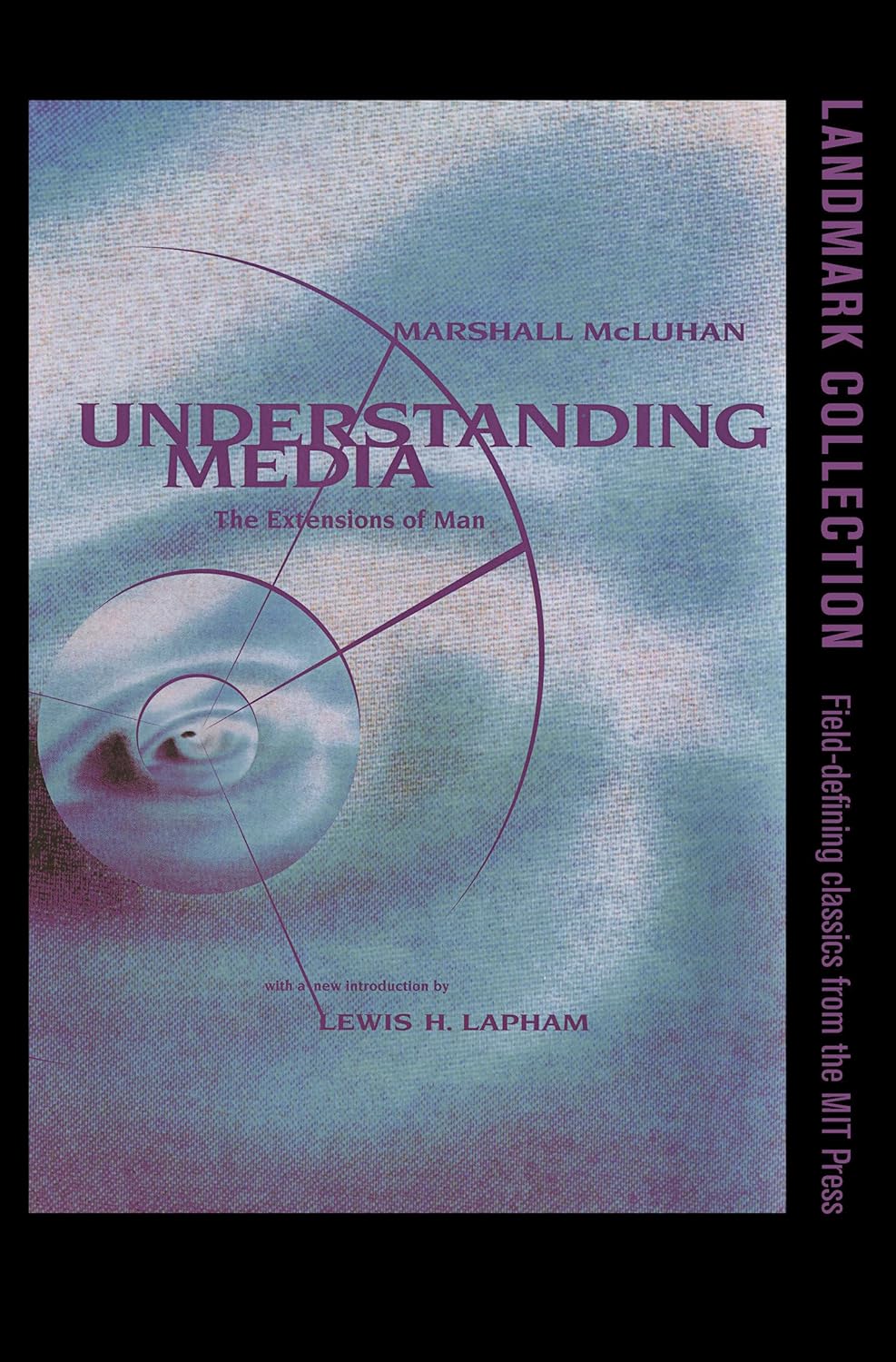
Understanding Media Summary
By Marshall McLuhan
The Extensions of Man
Summary preview
Marshall McLuhan opens a strange and exciting door. He asks you to stop staring only at the messages carried by books, newspapers, radio, film, or television, and to notice the hidden force of the media themselves. His most famous line, “the medium is the message,” is not a clever riddle tossed into the air for fun. It is a way of waking you up. He wants you to see that the real power of any medium lies not mainly in what it says, but in how it changes your senses, your habits, your scale of action, and the shape of the society around you. The book moves with quick turns, bold comparisons, and sudden flashes of insight. It does not unfold like a slow classroom lecture. It feels more like a guided walk through a hall of mirrors where old inventions become new again and familiar things begin to look uncanny. A wheel, a road, a clock, print, money, clothing, housing, radio, television, even weapons and automation all become media in a broad sense. They are extensions of human powers. One extends the foot, another the skin, another the eye, another the nervous system itself. Once you grasp that, the world begins to change its shape. Technology is no longer a pile of tools sitting outside us. It becomes part of us, and then, in time, it reshapes us. The purpose of the book is not to praise technology or condemn it. It is to make perception possible. We usually see the content of media and miss the environments they create. We notice the fish in the water and miss the water. That blindness leaves us at the mercy of our own inventions. The printed page trained us toward sequence, detachment, and private point of view. Electric media draw us back into involvement, simultaneity, and shared awareness. The tribal drum returns in new form through the electronic circuit. Distance collapses. Events in one place touch nerves everywhere else at once. What had been separated begins to fold together. Again and again, the book insists that every extension also creates an amputation. When one sense or function is enlarged, another part of our balance is dulled or pushed aside. To illustrate, a car extends the foot yet also alters cities, work, leisure, and even courtship. Print extends the eye yet can numb other forms of participation. The issue is never one simple gain. It is always a total rearrangement. So you are invited to read not for neat conclusions but for patterns. The central story here is the story of human beings remade by their own media, often without knowing it. Once that idea takes hold, newspapers, comic books, the telegraph, movies, and television all become clues in a larger drama. The book teaches you to ask not only what a medium carries, but what kind of world it quietly builds around you while you are busy looking somewhere else.
Sign up to continue reading
Get access to full book summaries, audio of the summaries, and many more.
Similar Books
Books with a similar vibe—explore more like this.
Algospeak
Adam Aleksic
How Social Media Is Transforming the Future of Language
4.5 (12)24 mins
It's Complicated
danah boyd
The Social Lives of Networked Teens
4.2 (10)26 mins
Nineteen Eighty-Four (1984)
George Orwell
A Dystopian Classic on the Dangers of Totalitarianism
4.9 (697)17 mins
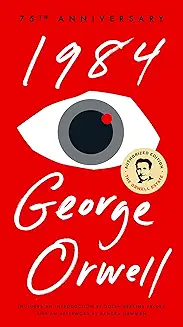
1984
George Orwell
A Dystopian Classic on the Dangers of Totalitarianism
4.7 (1738)16 mins

Once Upon a Stranger
Gillian Sandstrom
The Science of How Small Talk Can Add Up to a Big Life
4.7 (21)22 mins

The Chemistry Book
Derek B Lowe
From Gunpowder to Graphene, 250 Milestones in the History of Chemistry
4.7 (50)38 mins

Why Taiwan Matters
Kerry Brown
A Short History of a Small Island That Will Dictate Our Future
4.7 (13)27 mins

Habits of a Peacemaker
Steven T. Collis
10 Habits to Turn Toxic Conversations Into Healthy Dialogues
4.7 (9)22 mins
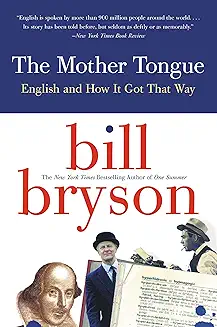
The Mother Tongue
Bill Bryson
English and How It Got That Way
4.6 (743)22 mins
The Code Breaker
Walter Isaacson
Jennifer Doudna, Gene Editing, and the Future of the Human Race
4.6 (1893)43 mins