
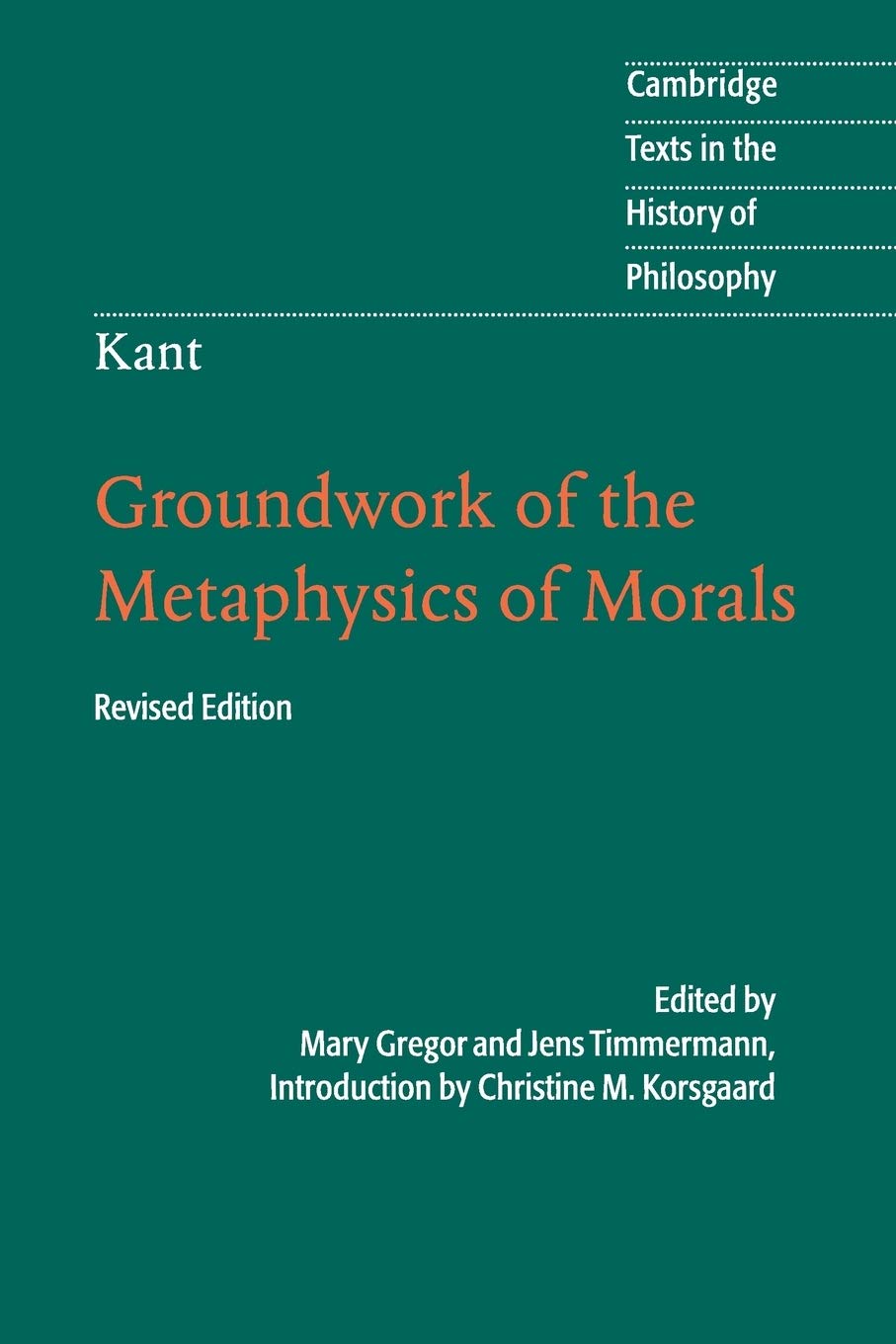
Groundwork of the Metaphysics of Morals Summary
By Immanuel Kant
Identifying and corroborating the supreme principle of morality
Summary preview
What sort of thing makes a human life morally worthy. Not talent, not success, not power, not even happiness. The little book before us begins from a startling claim. The only thing that can be called good without qualification is a good will. Intelligence can be used for noble ends or wicked ones. Courage can protect the weak or strengthen a tyrant. Even happiness can sit comfortably beside vanity and corruption. But a will that is good, simply because it chooses what is right, shines by its own light. That is the heart of the whole work. Immanuel Kant does not begin by asking what makes us feel good, nor by collecting examples of decent behavior from custom, religion, or politics. He wants a deeper foundation. He wants the principle that makes duty binding for every rational being as such. So he starts with what ordinary moral thinking already knows in a rough way. We praise a person who does the right thing because it is right, even when it costs them. We feel the difference between acting honestly from duty and merely acting honestly because it is useful, safe, or pleasant. The book tries to take that common insight, clean it of confusion, and show the pure law hidden inside it. The movement is careful and deliberate. First, we look at familiar moral experience and separate true moral worth from actions that only happen to agree with duty. Then the search rises to a more exact account of the concepts involved, especially will, duty, law, and reason. Finally, the inquiry reaches its highest point and asks how a free rational being can see itself as bound by a law it gives to itself. That is where ideas like autonomy, the kingdom of ends, and freedom take their full shape. This is not a book of practical advice in the everyday sense. It does not tell you how to raise children, vote well, or build good institutions. Its task is more basic and more daring. It asks what morality itself rests upon. Why must I keep a promise when breaking it would profit me. Why must I tell the truth when a lie would rescue my reputation. Why must I treat another person as more than a tool. The answer is not fear, reward, habit, or sentiment. It is reason recognizing its own law. So the book is both modest and immense. Modest because it keeps returning to a few plain examples and a handful of concepts. Immense because from those simple materials it tries to uncover the very source of obligation. Read in that spirit, the work becomes less like a stern lecture and more like a guided ascent. You begin with familiar judgments. You climb toward a universal principle. And at the summit you are asked to see yourself not as a creature pushed about by impulse, but as a lawgiving member of a moral world.
Sign up to continue reading
Get access to full book summaries, audio of the summaries, and many more.
Similar Books
Books with a similar vibe—explore more like this.
Lessons in Stoicism
John Sellars
What Ancient Philosophers Teach Us About How to Live
4.5 (704)23 mins
How to Think Like Socrates
Donald J. Robertson
Ancient Philosophy as a Way of Life in the Modern World
4.4 (258)20 mins
Critical Thinkers
Albert Rutherford
Methods for Clear Thinking and Analysis in Everyday Situations from the Greatest Thinkers in History
4.2 (392)30 mins
What Does It All Mean?
Thomas Nagel
A Very Short Introduction to Philosophy
4.2 (30) mins
Lost in Thought
Zena Hitz
The Hidden Pleasures of an Intellectual Life
4.0 (824)26 mins

The Sovereign Child
Aaron Stupple
How a Forgotten Philosophy Can Liberate Kids and Their Parents
3.8 (6)23 mins
Why We Sleep
Matthew Walker
Unlocking the Power of Sleep and Dreams
4.8 (1560)17 mins
Utilitarianism
John Stuart Mill
Explore a Timeless Ethics Classic
4.8 (46)24 mins

Alice in Wonderland
Lewis Carroll
Follow Alice down a rabbit hole of whimsical, witty absurdity.
4.8 (5) mins
Psychological Types
Carl Jung
Collected works from the supreme theorist of the conscious
4.7 (89) mins