
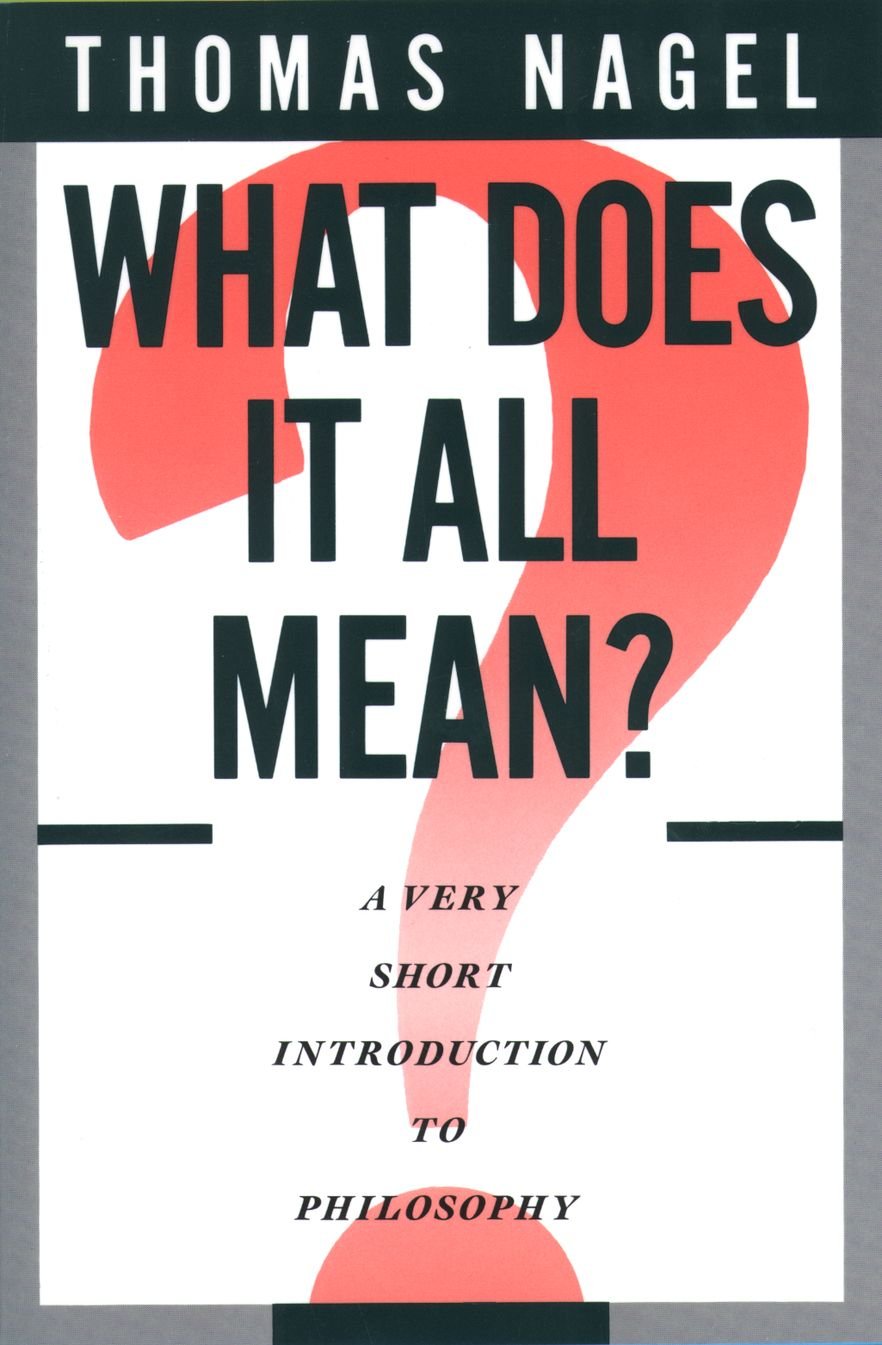
What Does It All Mean? Summary
By Thomas Nagel
A Very Short Introduction to Philosophy
Summary preview
Most of us go through daily life without stopping very often to ask the strangest questions. We get up, make plans, worry about money, speak to other people, remember yesterday, and expect tomorrow to arrive. Yet underneath all this, there are deep puzzles waiting quietly for anyone who turns and looks at them. How do I know there is a world outside my mind at all. How do I know other people are not robots or dreams. Am I really free to choose what I do. What makes something right or wrong. What is the self. What is death. And if life ends, what gives any of it meaning. That is the space this book opens up. Thomas Nagel does not try to bury these questions under technical language or pretend they belong only to specialists. He treats them as ordinary human questions, the kind that can suddenly appear in anyone's mind, often when life becomes quiet enough to notice how little is actually certain. The guiding spirit of the book is simple and brave. Philosophy begins when familiar things stop feeling obvious. The book moves through some of the oldest and most unsettling problems in philosophy. It starts from doubt, from the uneasy discovery that many of our everyday beliefs rest on assumptions we cannot fully prove. From there it turns to the minds of others, asking how one private inner life can ever know another. It goes on to the relation between mind and body, to the problem of personal identity, to the question of whether our actions are determined or free, and then to ethics, death, the meaning of life, and the challenge of inequality. None of these topics is treated as a remote museum piece. Each one is connected to ordinary experience, to the feeling of being a conscious person trying to understand where one stands. What makes the book so compelling is its honesty. It does not promise final answers where none are available. Instead, it shows how the questions arise, why simple answers fail, and what different lines of thought can and cannot explain. The result is not frustration so much as awakening. You begin to see that confusion is sometimes the beginning of clarity. There is also something generous in the way these ideas are presented. You are not being lectured at. You are being invited to think. The tone says, in effect, that if a question troubles you, that is reason enough to take it seriously. And once you do, even the most basic parts of life begin to look newly mysterious. A hand, a memory, a promise, a choice, another person's face, even the fact that anything exists at all, each becomes something to examine. By the end, the book leaves you with a sharper sense of both the power and the limits of human thought. It shows that philosophy is not a storehouse of facts but an activity of reflection. It is what happens when the mind turns back on...
Sign up to continue reading
Get access to full book summaries, audio of the summaries, and many more.
Similar Books
Books with a similar vibe—explore more like this.
Lessons in Stoicism
John Sellars
What Ancient Philosophers Teach Us About How to Live
4.5 (704)23 mins
How to Think Like Socrates
Donald J. Robertson
Ancient Philosophy as a Way of Life in the Modern World
4.4 (258)20 mins
Critical Thinkers
Albert Rutherford
Methods for Clear Thinking and Analysis in Everyday Situations from the Greatest Thinkers in History
4.2 (392)30 mins
Groundwork of the Metaphysics of Morals
Immanuel Kant
Identifying and corroborating the supreme principle of morality
4.2 (15)21 mins
Lost in Thought
Zena Hitz
The Hidden Pleasures of an Intellectual Life
4.0 (824)26 mins
The Sovereign Child
Aaron Stupple
How a Forgotten Philosophy Can Liberate Kids and Their Parents
3.8 (6)23 mins
Why We Sleep
Matthew Walker
Unlocking the Power of Sleep and Dreams
4.8 (1560)17 mins
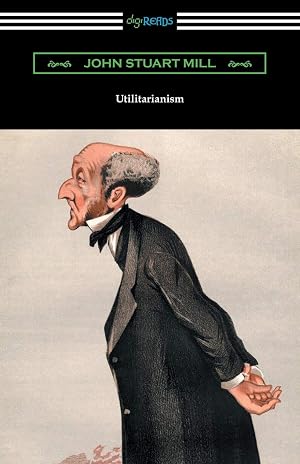
Utilitarianism
John Stuart Mill
Explore a Timeless Ethics Classic
4.8 (46)24 mins
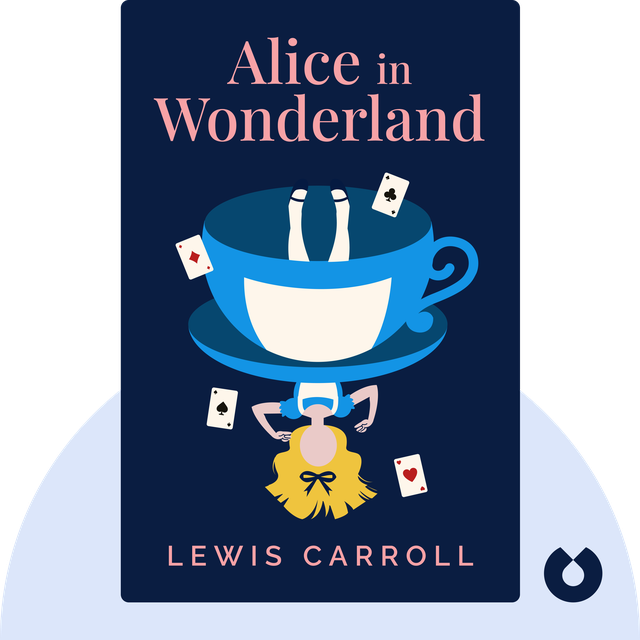
Alice in Wonderland
Lewis Carroll
Follow Alice down a rabbit hole of whimsical, witty absurdity.
4.8 (5)24 mins
Psychological Types
Carl Jung
Collected works from the supreme theorist of the conscious
4.7 (89)21 mins