
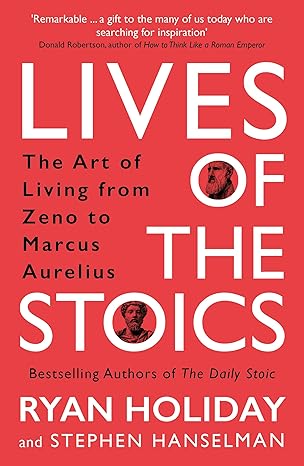
Lives of the Stoics
By Ryan Holiday
The Art of Living from Zeno to Marcus Aurelius
Introduction
Stoicism is often treated like a set of sayings you can paste on a wall. Be calm. Focus on what you control. Endure hardship. Useful, yes, but incomplete. What gives those ideas weight is not just the logic behind them. It is the lives that carried them. Lives tested by slavery, exile, illness, wealth, political power, grief, war, and the constant pull of ego. That is the real project here. Not abstract philosophy floating above the world, but philosophy walking around inside it, bruised and busy and very human. That is what makes Lives of the Stoics so compelling. Ryan Holiday and Stephen Hanselman do not hand you a dry timeline of thinkers or a classroom survey of doctrines. They introduce a cast of people who struggled, failed, learned, changed, and tried again. Some were born into privilege. Some had almost nothing. Some ruled empires. Some were owned by other men. Yet across wildly different circumstances, they returned to the same essential challenge. How do you live well in a world that does not obey your wishes? The book moves from the early Greek roots of the school through the Roman figures most readers know best, but it does so by telling stories. You meet Zeno, who lost everything in a shipwreck and found philosophy in the wreckage. You meet Cleanthes, who worked all night hauling water so he could study by day. You meet Chrysippus, whose relentless mind helped turn a fragile school into a durable system. Then the scene expands. Rome enters. Politics enters. So do compromise, ambition, danger, and moral risk. Suddenly Stoicism is no longer just a way to think. It becomes a way to survive courts, armies, mobs, tyrants, and personal catastrophe. The deeper message is that Stoicism was never about perfection. It was about practice. These men and women were not marble statues. They got angry, made mistakes, desired status, loved deeply, and sometimes fell short of their own ideals. That does not weaken the philosophy. It proves its necessity. A philosophy for flawless people would be useless. This one was built for ordinary mortals under pressure. As the stories unfold, a pattern appears. Character matters more than reputation. Self command matters more than comfort. Justice matters more than success. Freedom, strangely enough, can exist even in chains, while slavery can thrive inside palaces. The lessons come not as lectures but as examples, sometimes inspiring, sometimes cautionary, always grounded in life. By the end, what you carry away is not simply a better knowledge of Stoicism. You carry a sharper sense of what a human being can be when principle is stronger than circumstance.
Sign up to continue reading
Get access to full book summaries, audio of the summaries, and many more.
Similar Books
Books with a similar vibe—explore more like this.
The Midnight Library
Matt Haig
A Fantasy Novel About the Choices That Lead to a Life Well-Lived
4.7 (4782)32 mins
The Republic
Plato
One of the most important philosophical texts ever written
4.6 (1294)39 mins
The Prince
Niccolò Machiavelli
Machiavelli’s classic text on leadership and politics
4.6 (973)37 mins
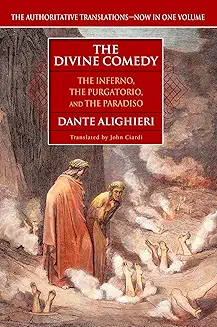
The Divine Comedy
Dante Alighieri
The Inferno, The Purgatorio, and The Paradiso
4.6 (457)27 mins
Humankind
Rutger Bregman
A Hopeful History
4.4 (341)33 mins
A Room of One's Own
Virginia Woolf
An Essential Literary and Feminist Text
4.4 (930)24 mins
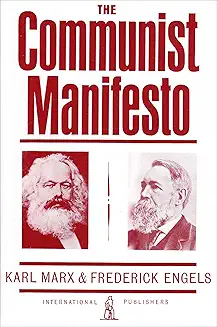
The Communist Manifesto
Karl Marx
Workers of the world unite!
4.4 (738)24 mins
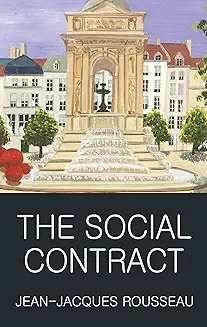
The Social Contract
Jean-Jacques Rousseau
A cornerstone in modern political and social thought
4.4 (892)25 mins
The Harvard Psychedelic Club
Don Lattin
How Timothy Leary, Ram Dass, Huston Smith, and Andrew Weil Killed the Fifties and Ushered in a New Age for America
4.3 (283)17 mins
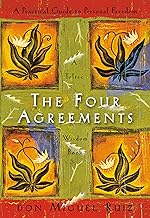
The Four Agreements
Don Miguel Ruiz & Janet Mills
A Practical Guide to Personal Freedom
4.3 (913)21 mins