

The Communist Manifesto
By Karl Marx
Workers of the world unite!
Introduction
A strange cry opens this little book, and it is meant to wake you at once. “A spectre is haunting Europe.” Not a ghost from old legend, but a new force that the rulers of the world already fear before they fully understand it. That force is communism. From the first lines, the aim is not to whisper, soften, or hide. The purpose is to speak plainly. Let the powers of Europe hear what the communists actually think, what they want, and why the old world trembles at their approach. The heart of the book is simple and fierce. Human history, we are told, is the history of class struggles. Again and again, society splits into groups with opposed interests. Freeman and slave. Lord and serf. Guild master and journeyman. In the modern world, those old layers have been swept aside and reduced more and more to two great hostile camps, bourgeoisie and proletariat. The bourgeoisie owns the means of production, the factories, machines, land, trade, and money that shape economic life. The proletariat owns little but its labor, and must sell that labor to live. What makes this argument so powerful is that it does not treat capitalism as eternal. It shows it as a historical force that rose out of earlier forms of life. The modern middle class did not always rule. It fought its way upward by breaking feudal bonds, tearing down inherited privilege, opening world markets, and revolutionizing industry. In doing so, it transformed everything. Family life, religion, politics, culture, and even human feeling were pulled into the logic of exchange. “All that is solid melts into air,” and life itself begins to move at the speed of the market. Yet the same system that creates enormous productive power also creates misery, instability, and conflict. It gathers workers together in factories and cities, disciplines them under the machine, and pushes wages down while wealth piles up elsewhere. It produces crises of overproduction, those absurd moments when society has too much and yet millions have too little. Most important, it creates its own gravedigger. The working class grows in number, in unity, and in awareness of its common position. So this book is both diagnosis and call to action. It explains how modern society came to be, why its inner contradictions sharpen, what the communists stand for, how they differ from other reformers and rivals, and why workers of every country must join in a common struggle. Karl Marx and his collaborator do not offer a polite request for kindness from the rich. They offer a map of conflict, a theory of change, and a rallying cry meant to move history.
Sign up to continue reading
Get access to full book summaries, audio of the summaries, and many more.
Similar Books
Books with a similar vibe—explore more like this.
The Midnight Library
Matt Haig
A Fantasy Novel About the Choices That Lead to a Life Well-Lived
4.7 (4782)32 mins
The Republic
Plato
One of the most important philosophical texts ever written
4.6 (1294)39 mins
The Prince
Niccolò Machiavelli
Machiavelli’s classic text on leadership and politics
4.6 (973)37 mins
The Divine Comedy
Dante Alighieri
The Inferno, The Purgatorio, and The Paradiso
4.6 (457)27 mins
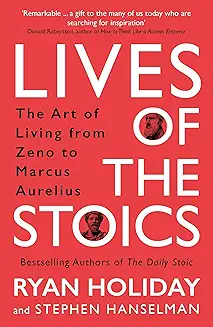
Lives of the Stoics
Ryan Holiday
The Art of Living from Zeno to Marcus Aurelius
4.5 (1380)28 mins
Humankind
Rutger Bregman
A Hopeful History
4.4 (341)33 mins
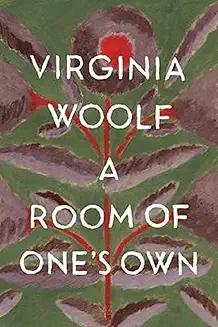
A Room of One's Own
Virginia Woolf
An Essential Literary and Feminist Text
4.4 (930)24 mins
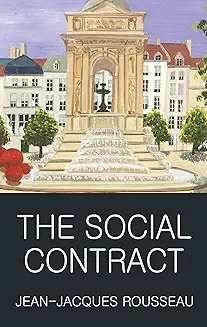
The Social Contract
Jean-Jacques Rousseau
A cornerstone in modern political and social thought
4.4 (892)25 mins
The Harvard Psychedelic Club
Don Lattin
How Timothy Leary, Ram Dass, Huston Smith, and Andrew Weil Killed the Fifties and Ushered in a New Age for America
4.3 (283)17 mins
The Four Agreements
Don Miguel Ruiz & Janet Mills
A Practical Guide to Personal Freedom
4.3 (913)21 mins