
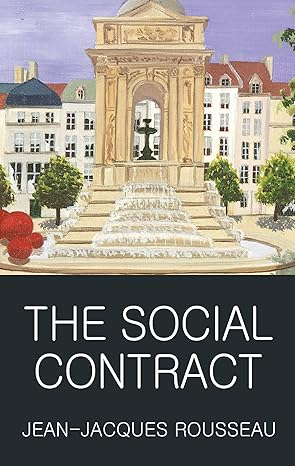
The Social Contract
By Jean-Jacques Rousseau
A cornerstone in modern political and social thought
Introduction
Jean Jacques Rousseau opens this book with a line that still strikes like a bell. “Man is born free, and everywhere he is in chains.” With that cry he does not merely complain about kings, laws, or the pride of the rich. He asks a deeper question. How can human beings live together without losing themselves? How can we obey and yet remain free? How can political order be rightful, and not just a polished form of force? That is the heart of this work. It is not a history of governments, nor a list of reforms, nor a handbook for rulers who wish to manage obedient subjects. It is an inquiry into legitimacy. Many powers exist in the world, but not all power deserves our obedience. A robber may command with a pistol, a conqueror may impose his yoke, a tyrant may wrap violence in ceremony, but none of these creates right. If there is to be a just political community, it must rest on agreement, not brute domination. So the book sets out to discover the principles of a lawful political order. It begins from human freedom, because no one is naturally the master of another. It then asks what kind of pact can join many persons into one body while protecting each member. The answer is the social contract. By this act, each person gives himself not to a ruler, but to the whole community. In doing so, each gains civil freedom, moral freedom, and membership in a collective person guided by a common will. From there the argument widens. What exactly is sovereignty? Who makes laws? What is the general will, and how is it different from the desires of everyone taken one by one? Can the people be represented, or must they speak for themselves? What role should government play if it is not the sovereign? Why do republics decay, and what institutions preserve them? How should voting work, what can religion contribute or destroy, and when may a state defend itself with stern force? These pages are compact, but they are full of fire. They praise liberty, yet demand discipline. They trust the people, yet worry about factions, luxury, and corruption. They dream of a political body in which each citizen is both ruler and subject. The tone can be severe, but the hope is generous. The aim is not to make us small before authority. It is to show how authority can arise from us, belong to us, and bind us without humiliating us. What follows is a bold path through that vision. It moves from first principles to institutions, from abstract right to public life, and from the foundations of law to the soul of citizenship itself.
Sign up to continue reading
Get access to full book summaries, audio of the summaries, and many more.
Similar Books
Books with a similar vibe—explore more like this.
The Midnight Library
Matt Haig
A Fantasy Novel About the Choices That Lead to a Life Well-Lived
4.7 (4782)32 mins
The Republic
Plato
One of the most important philosophical texts ever written
4.6 (1294)39 mins
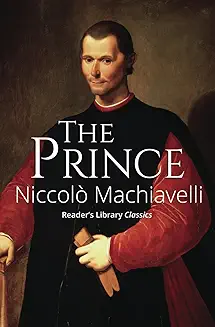
The Prince
Niccolò Machiavelli
Machiavelli’s classic text on leadership and politics
4.6 (973)37 mins
The Divine Comedy
Dante Alighieri
The Inferno, The Purgatorio, and The Paradiso
4.6 (457)27 mins
Lives of the Stoics
Ryan Holiday
The Art of Living from Zeno to Marcus Aurelius
4.5 (1380)28 mins
Humankind
Rutger Bregman
A Hopeful History
4.4 (341)33 mins
A Room of One's Own
Virginia Woolf
An Essential Literary and Feminist Text
4.4 (930)24 mins
The Communist Manifesto
Karl Marx
Workers of the world unite!
4.4 (738)24 mins
The Harvard Psychedelic Club
Don Lattin
How Timothy Leary, Ram Dass, Huston Smith, and Andrew Weil Killed the Fifties and Ushered in a New Age for America
4.3 (283)17 mins
The Four Agreements
Don Miguel Ruiz & Janet Mills
A Practical Guide to Personal Freedom
4.3 (913)21 mins