

The Republic Summary
By Plato
One of the most important philosophical texts ever written
Summary preview
What kind of life is truly good. What is justice. Why do people and cities go wrong. And can the soul be brought into harmony so that a human being becomes whole, wise, and happy. These are the great questions that guide this long conversation. The book opens like a simple discussion among friends and rivals, yet it grows into a vast journey through politics, education, psychology, poetry, knowledge, love of truth, and the fate of the soul. What begins in a house near the Piraeus becomes a search for the shape of a just life. Plato gives us a work that is not merely about laws or governments. It is about the human being from the inside out. The city becomes a mirror in which the soul can be seen more clearly. If justice is hard to spot in one person, perhaps it will stand out more plainly in a whole community. So the speakers build an ideal city in words, not because they think such a city is easy to found, but because the larger picture helps reveal the smaller one. The argument moves from common opinions about paying debts, helping friends, and harming enemies to a much deeper claim. Justice is not a bargain, not a mask for weakness, and not a trick of power. It is a kind of order, a fitting arrangement in which each part does its own work well. Along the way, the conversation challenges almost everything people usually admire. Wealth, honor, poetry, political ambition, family pride, even ordinary ideas of freedom all come under scrutiny. The speakers ask whether pleasure is always good, whether democracy really frees us, whether rulers should own private property, and whether the best leaders are precisely those who do not desire power for selfish reasons. To illustrate, they compare the mind to a city, the good to the sun, education to turning the eye of the soul, and ordinary human life to prisoners watching shadows on a cave wall. These images have stayed alive for centuries because they make difficult thoughts vivid and immediate. The book also has a dramatic pulse. Different voices push back. Some defend convention, some glorify strength, some doubt that justice is useful at all. The central speaker does not simply preach. He questions, tests, refines, and often surprises. He knows that people resist philosophy because philosophy asks us to turn around. It asks us to examine desire, ambition, and habit. It tells us that many things praised by the crowd are only glittering appearances. By the end, the inquiry reaches from the structure of the best city to the destiny of the soul after death. The message is at once political and deeply personal. A city becomes just when reason governs with courage as its ally and appetite in proper measure. A person becomes just in the same way. The work invites you to ask not only what a good society looks like, but what rules within you right now. That is...
Sign up to continue reading
Get access to full book summaries, audio of the summaries, and many more.
Similar Books
Books with a similar vibe—explore more like this.
Utilitarianism
John Stuart Mill
Explore a Timeless Ethics Classic
4.8 (46)24 mins
Hamlet
William Shakespeare
A Young Prince's Tragic Descend Into Madness and Revenge
4.8 (43) mins
The Epic of Gilgamesh
Anonymous
A timeless tale of friendship, mortality, and the search for meaning
4.8 (34) mins
The Midnight Library
Matt Haig
A Fantasy Novel About the Choices That Lead to a Life Well-Lived
4.7 (4782)32 mins
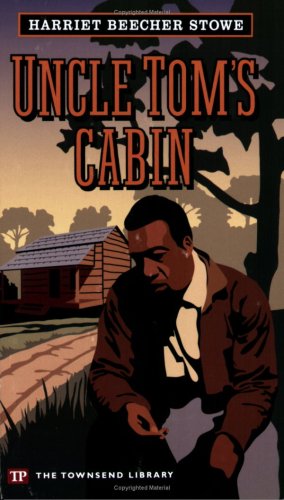
Uncle Tom's Cabin
Harriet Beecher Stowe
The Problem of Slavery and Its Treatment of Human Beings
4.7 (41)25 mins
Bedtime Biography: Isaac Newton
James Gleick
Learn the truth behind the legend
4.7 (45) mins
The Odyssey
Homer
The Ancient Greek Epic Poem About A Hero's Journey Home
4.7 (60) mins
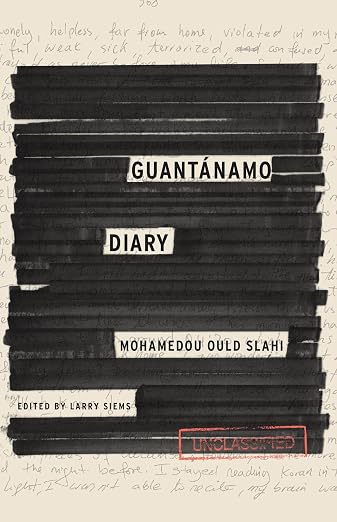
Guantánamo Diary
Mohamedou Ould Slahi, edited by Larry Siems
Guantanamo from the Inside
4.7 (3) mins
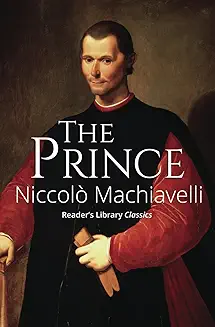
The Prince
Niccolò Machiavelli
Machiavelli’s classic text on leadership and politics
4.6 (973)37 mins
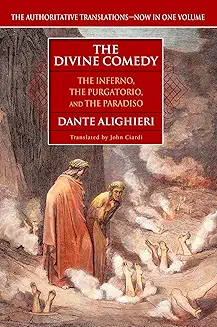
The Divine Comedy
Dante Alighieri
The Inferno, The Purgatorio, and The Paradiso
4.6 (457)27 mins