
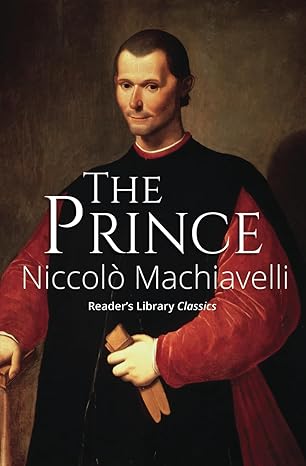
The Prince Summary
By Niccolò Machiavelli
Machiavelli’s classic text on leadership and politics
Summary preview
You are about to enter a hard little book that speaks in a plain voice about power, danger, luck, fear, and the difficult art of ruling men. It does not flatter your hopes. It does not ask what people ought to be in some perfect world. It asks what they are, what they desire, what they fear, and how a ruler may survive among them. That is its pulse. Niccolò Machiavelli writes as a man who has watched states rise, stumble, and fall, and he offers not a dream but a manual. At the center of The Prince lies one severe question. If you gain power, how do you keep it? Around that question gather many others. Is it better to inherit rule or seize it? Is cruelty always evil, or can it be useful if used well and all at once? Should a ruler be loved or feared? Can promises be broken when keeping them leads to ruin? What matters more, fortune or human strength? This book answers each question with startling boldness. It looks at ancient rulers and recent ones, republics and principalities, mercenaries and armies, conspiracies and popular hatred. Again and again it insists that the world belongs not to the timid moralist but to the ruler who sees clearly, chooses firmly, and adapts quickly. Yet this is not simply a celebration of ruthlessness. It is a study of necessity. Men are changeable, ungrateful, ambitious, and often selfish. A state is fragile. Enemies wait outside, rivals stir within, and the crowd itself can become a storm. In such a world, goodness alone is not enough. A prince who tries to be good in every circumstance will be destroyed by those who are not. So the book teaches a discipline of realism. Learn when mercy weakens you. Learn when generosity empties your coffers. Learn when delay invites danger. Learn when appearance matters more than truth. Still, there is life and movement here, not mere cold instruction. The pages are filled with examples, such as Cesare Borgia, Moses, Cyrus, Romulus, and the kings of France and Spain. Through them, the argument becomes vivid. We are shown bold men lifted by talent, fools ruined by indecision, and rulers undone by trusting the wrong forces. The style is quick, sharp, and unsentimental, yet behind it burns urgency. This is advice written by one who longs to see political strength where there has been weakness. If you read closely, you will see that this book is about more than one prince. It is about the anatomy of power itself. It reveals how rule is won, lost, defended, disguised, and renewed. It teaches that success often belongs to the one who can be lion and fox together, who can command arms, govern appearances, and bend with the times before time breaks him.
Sign up to continue reading
Get access to full book summaries, audio of the summaries, and many more.
Similar Books
Books with a similar vibe—explore more like this.
Guantánamo Diary
Mohamedou Ould Slahi, edited by Larry Siems
Guantanamo from the Inside
4.7 (3) mins

A Short History of Brexit
Kevin O'Rourke
From Brentry to Backstop
4.5 (33) mins
The End of Power
Moisés Naím
From Boardrooms to Battlefields and Churches to States, Why Being in Charge Isn't What It Used To Be
4.5 (4) mins
Identity
Francis Fukuyama
The Demand for Dignity and the Politics of Resentment
4.5 (28) mins
For the Record
David Cameron
An honest account from a prime minister who truly altered his country's course
4.5 (14) mins
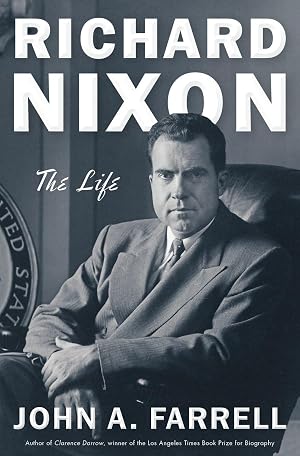
Richard Nixon
John A. Farrell
The Life
4.4 (30) mins

On the House
John Boehner
A Washington Memoir
4.4 (3) mins
Chaos Under Heaven
Josh Rogin
America, China, and the Battle for the 21st Century
4.3 (16) mins
A Warning
Anonymous
A political tell-all of an administration in disarray
4.3 (11) mins

The First Muslim
Lesley Hazleton
The Story of Muhammad
4.2 (27) mins