
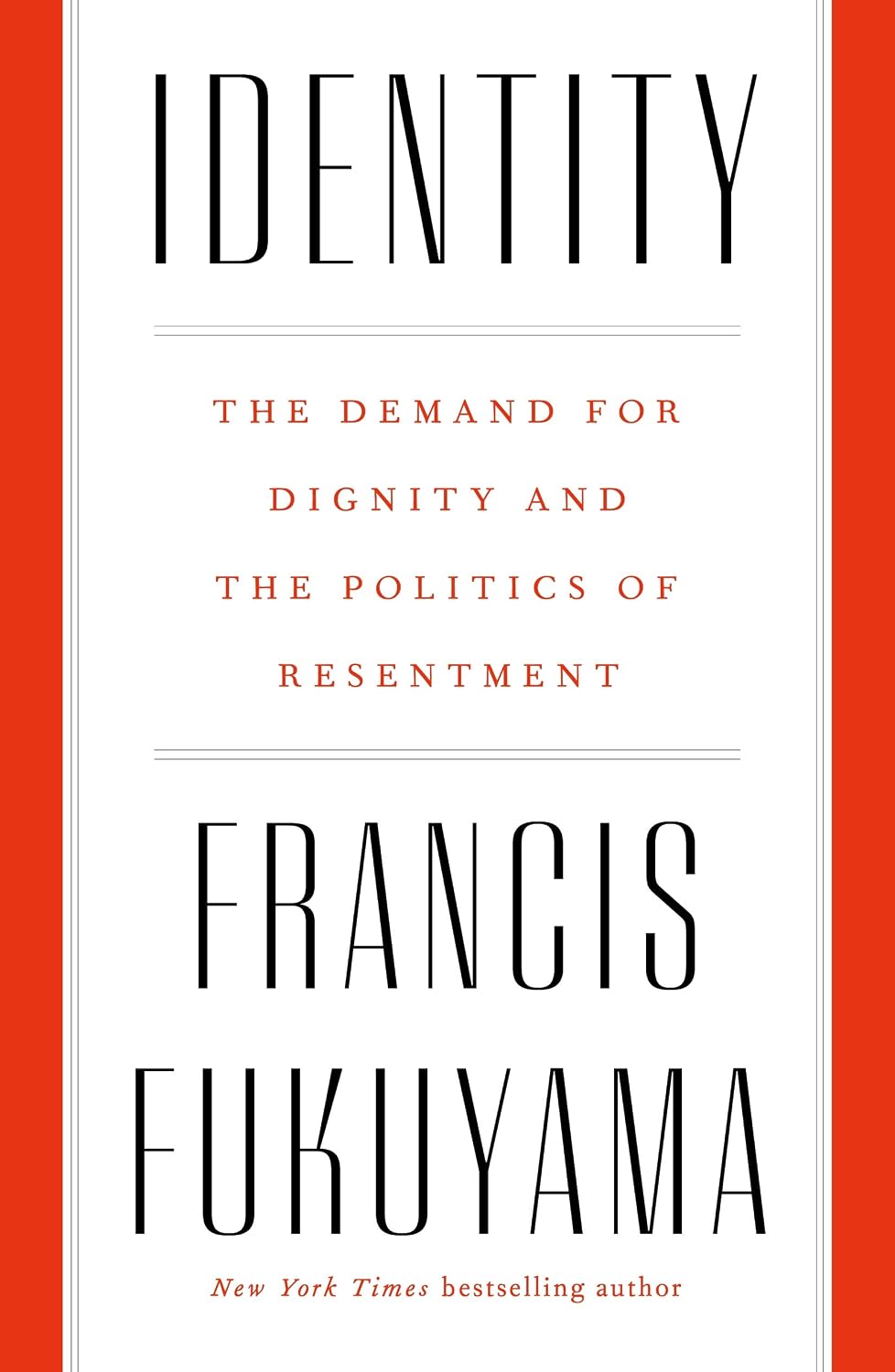
Identity Summary
By Francis Fukuyama
The Demand for Dignity and the Politics of Resentment
Summary preview
Why do people who seem materially secure still feel unseen, insulted, or shut out of the story of their own societies? Why do democracies that promised equal rights now crack under the pressure of anger from the left and the right alike? Those are the questions at the heart of Identity, where Francis Fukuyama tries to make sense of a strange political moment. We often explain modern politics through economics alone. We talk about jobs lost to trade, wages flattened by technology, and whole communities left behind by globalization. All of that matters. But it does not explain everything. It does not fully explain why people demand respect as much as redistribution, why they gather around wounded pride, or why public life becomes a contest over recognition. The deeper force, I argue, is the human longing for dignity. We want more than comfort and safety. We want our inner worth to be acknowledged by others. We want to know that who we are matters. When that need is denied, ignored, or mocked, it becomes political. It can lead marginalized groups to fight for inclusion. It can also lead majorities to feel dispossessed and to rally behind leaders who promise to restore honor. Identity politics, then, is not some passing fad or side issue. It grows out of something permanent in human nature. The book traces how this idea developed. It begins with old philosophical questions about the self and the soul, then moves through the Protestant Reformation, Rousseau, Kant, Hegel, and modern democratic struggles. Along the way, the meaning of dignity changes. At first, only a few people are considered worthy of full recognition. Over time, more and more groups insist that dignity belongs to everyone. That is a moral achievement. Yet the same movement also splinters the common life of liberal democracies when politics turns away from broad shared citizenship and toward ever narrower forms of belonging. So this is a story about freedom, religion, nationalism, migration, resentment, Islamism, populism, and the fragile promise of democratic equality. It is also a warning. If we cannot build larger identities that are open, civic, and generous, our societies will keep breaking into tribes. If we cannot recognize one another as equal citizens while still making room for real difference, democratic life will become more bitter and less governable. The challenge is not to erase identity. It is to shape it wisely. That means understanding where the hunger for recognition comes from, how it was transformed by modernity, and how it might yet be directed toward a more cohesive and liberal political order.
Sign up to continue reading
Get access to full book summaries, audio of the summaries, and many more.
Similar Books
Books with a similar vibe—explore more like this.
Guantánamo Diary
Mohamedou Ould Slahi, edited by Larry Siems
Guantanamo from the Inside
4.7 (3)27 mins

The Prince
Niccolò Machiavelli
Machiavelli’s classic text on leadership and politics
4.6 (973)37 mins

A Short History of Brexit
Kevin O'Rourke
From Brentry to Backstop
4.5 (33)33 mins
The End of Power
Moisés Naím
From Boardrooms to Battlefields and Churches to States, Why Being in Charge Isn't What It Used To Be
4.5 (4)32 mins

For the Record
David Cameron
An honest account from a prime minister who truly altered his country's course
4.5 (14)30 mins

Richard Nixon
John A. Farrell
The Life
4.4 (30)35 mins

On the House
John Boehner
A Washington Memoir
4.4 (3)27 mins

Chaos Under Heaven
Josh Rogin
America, China, and the Battle for the 21st Century
4.3 (16)30 mins

A Warning
Anonymous
A political tell-all of an administration in disarray
4.3 (11)26 mins

The First Muslim
Lesley Hazleton
The Story of Muhammad
4.2 (27)35 mins