
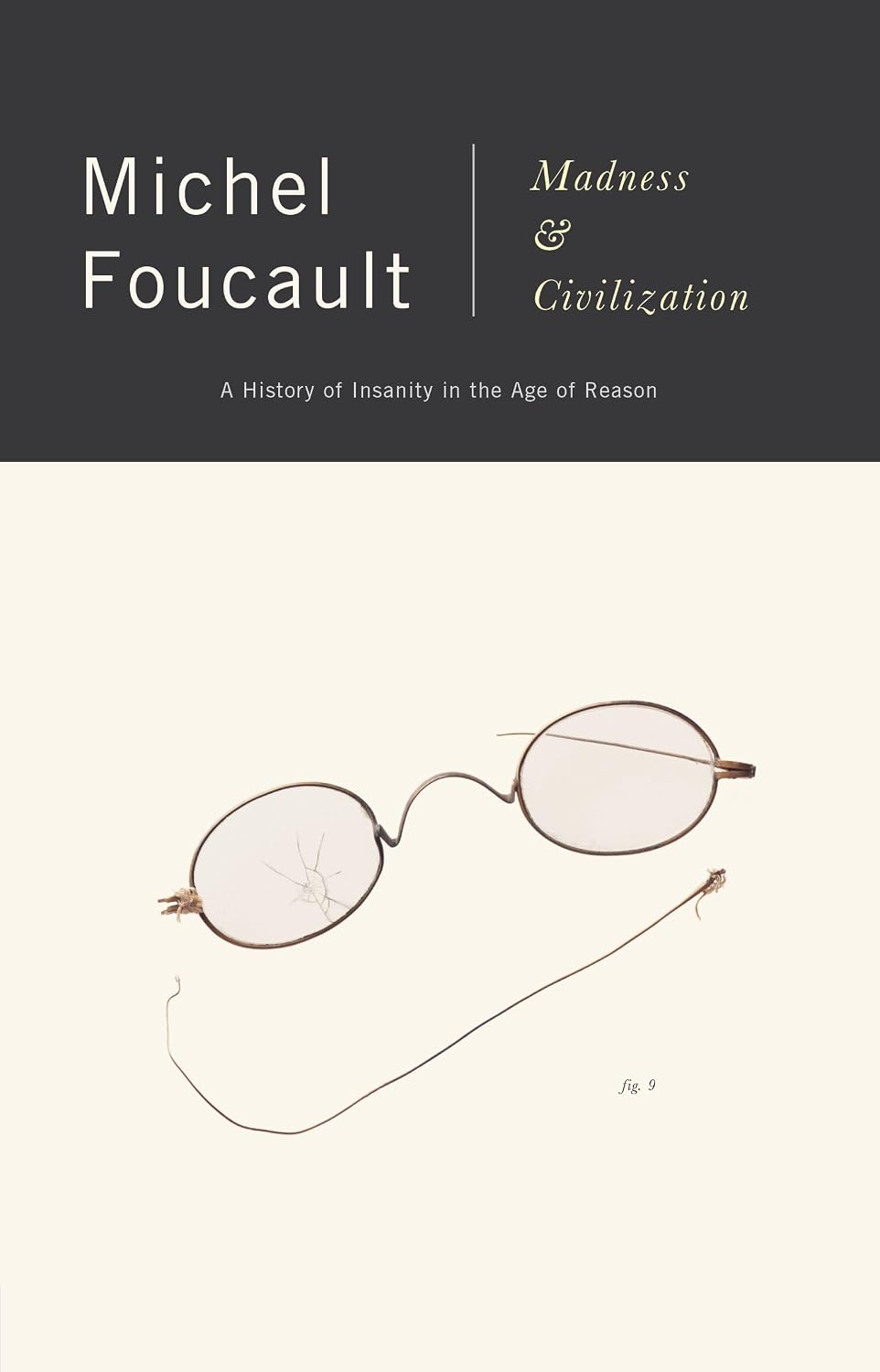
Madness and Civilization Summary
By Michel Foucault
A History of Insanity in the Age of Reason
Summary preview
Madness and Civilization invites you into a long, unsettling story about how a society learns to look at unreason, how it gives it a place, then takes that place away, then builds new rooms, new rules, new words, and calls all of that care, truth, or necessity. What appears at first to be a history of mental illness turns out to be something stranger and deeper. It is a history of boundaries. It asks how people came to separate reason from unreason, sanity from folly, the normal from the intolerable. And it asks who gains the right to speak when that separation is made. Michel Foucault does not tell this story as a steady march of progress. He does not say that old ages were simply ignorant and modern times finally became humane. Quite the opposite. He keeps turning your eyes toward those moments where a culture thinks it is becoming more rational, more compassionate, more scientific, while quietly tightening its grip on those it excludes. What changes across the centuries is not only how madness is treated, but what it is allowed to mean. Sometimes it carries a dark wisdom. Sometimes it appears as scandal, danger, sin, idleness, or disease. Sometimes it is forced into silence so that reason may hear only its own voice. The book moves from the late medieval world, where the figure of the fool still wandered near the center of cultural imagination, into the classical age, where great institutions of confinement gathered together beggars, libertines, the poor, and the mad under one disciplinary roof. Then it follows the birth of the asylum, often celebrated as a liberation, and asks whether this new space truly freed the mad or merely enclosed them in a subtler web of judgment. Doctors, priests, magistrates, reformers, families, and moral codes all enter this drama. Science itself appears not as a neutral discovery of facts, but as one more way of organizing silence and authority. What makes this book so powerful is that it never lets madness become a simple medical object. It keeps before you the voices, images, fears, and rituals through which a civilization defines itself by casting something outside itself. The mad person is not just someone diagnosed. The mad person becomes the mirror in which reason sees its own face and congratulates itself for being clear, ordered, and true. Yet that mirror is cracked. It reflects violence as much as knowledge. So what unfolds here is less a textbook history than an archaeology of exclusion. You are asked to listen for what official histories forget, for what institutions hide behind noble language, and for the strange dialogue between reason and unreason that modern life tries so hard to deny. By the time you reach the end, the question is no longer only what happened to madness. It is what happened to us when we decided we alone could define it.
Sign up to continue reading
Get access to full book summaries, audio of the summaries, and many more.
Similar Books
Books with a similar vibe—explore more like this.

Psychological Types
Carl Jung
Collected works from the supreme theorist of the conscious
4.7 (89)21 mins

Wanting
Luke Burgis
The Power of Mimetic Desire in Everyday Life
4.6 (53)33 mins
Humankind
Rutger Bregman
A Hopeful History
4.4 (341)33 mins
Consciousness Explained
Daniel C. Dennett
Redefine Your Understanding of the Mind and Consciousness
4.4 (42)24 mins

Discipline & Punish
Michel Foucault
The Birth of the Prison
4.4 (49)27 mins
Start Making Sense
Steven J Heine
How Existential Psychology Can Help Us Build Meaningful Lives in Absurd Times
4.3 (12)18 mins

The Wretched of the Earth
Frantz Fanon
A Powerful Exploration of Colonialism's Psychological Impact
4.3 (9)22 mins
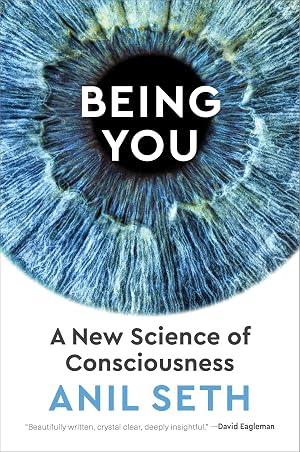
Being You
Anil Seth
A New Science of Consciousness
4.3 (189)31 mins
Critical Thinkers
Albert Rutherford
Methods for Clear Thinking and Analysis in Everyday Situations from the Greatest Thinkers in History
4.2 (392)30 mins
Science of Evil
Simon Baron-Cohen
On Empathy and the Origins of Cruelty
4.1 (539)24 mins