
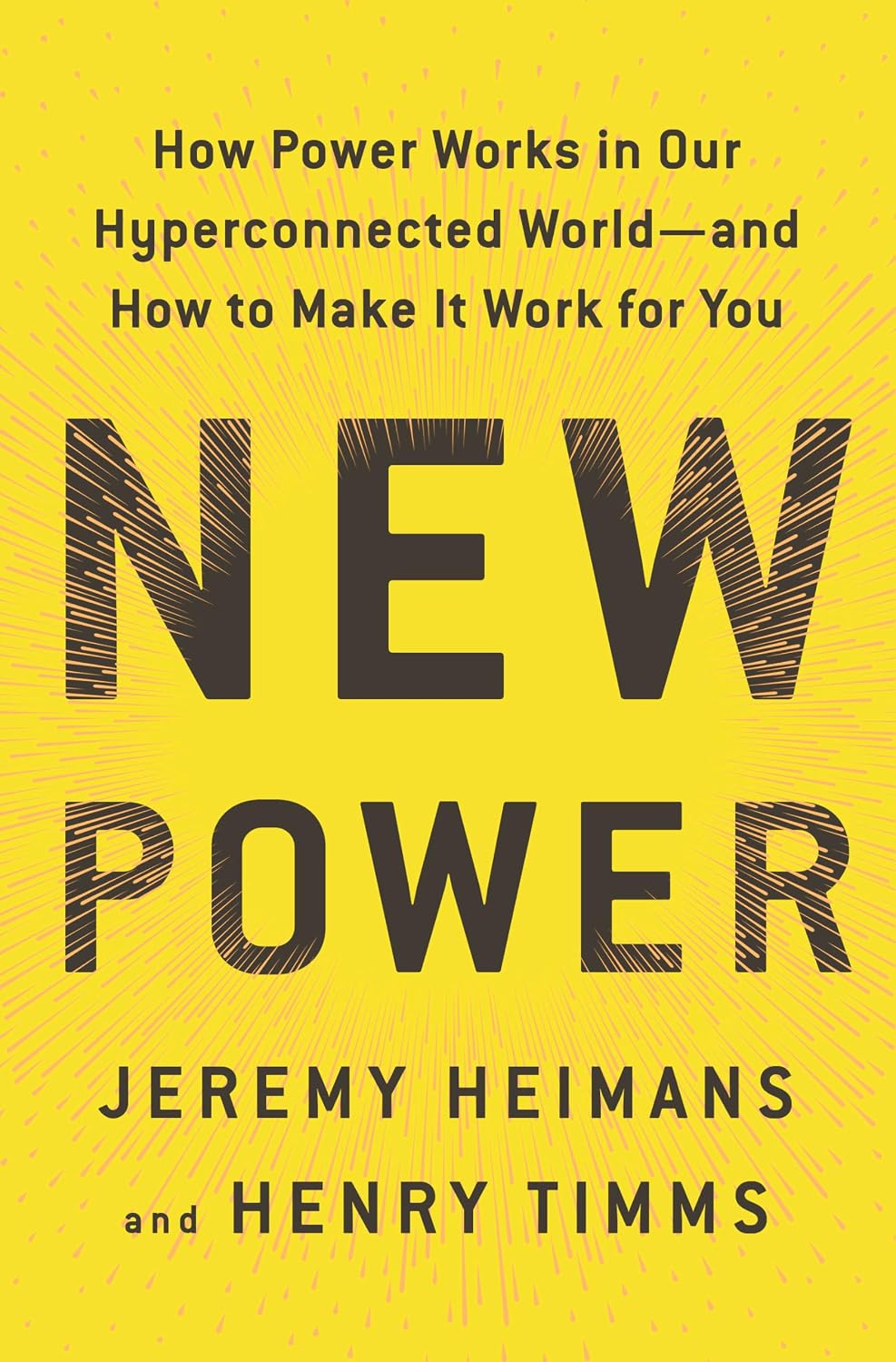
New Power Summary
By Jeremy Heimans and Henry Timms
How Power Works In Our Hyperconnected World – and How To Make It Work For You
Summary preview
Power is changing shape right in front of us. That is the big idea at the heart of this book. For a long time, most of us lived inside systems built on what the authors call old power. Old power works like a currency. It is held by a few, guarded carefully, and spent to make things happen. It values hierarchy, control, expertise, and ownership. Think of big institutions, top down leadership, and carefully managed messages. It can be effective, even necessary, but it depends on keeping power scarce. Now a different logic is spreading fast. Jeremy Heimans and Henry Timms call it new power. New power works more like a current. It is made by many. It grows when people participate. It depends on peer coordination, open networks, and a sense that people are not just consumers or followers, but shapers of what happens. It shows up in everything from viral campaigns and online movements to businesses that invite users to build, rate, remix, and spread. It can be thrilling, creative, and deeply democratic. It can also be chaotic, manipulative, and vulnerable to abuse. The book is not saying that old power is disappearing. Far from it. The world we actually live in is a messy mix of both. Established institutions still matter. Governments, corporations, religious groups, media companies, and nonprofits still hold huge influence. But they are being challenged by new expectations. People now want a voice, not just a product. They want to belong, not just buy. They want participation, not just persuasion. Organizations that ignore this shift can find themselves blindsided. Organizations that understand it can build energy that travels farther and faster than anything money alone can buy. What makes this book especially useful is that it does not treat new power as a feel good slogan. It treats it as a force with its own rules, values, and risks. It asks why some ideas spread like wildfire while others stall. It explores why some leaders inspire mass participation while others merely command attention. It looks at movements, brands, and public figures who have learned how to channel participation, and also those who have lost control of the very crowds they helped gather. At its core, this is a guide to a new landscape of influence. It is about how power moves now, who can harness it, and what kind of future that creates. If you want to understand why a teenager with a phone can challenge a giant institution, why a company can rise by giving its users the wheel, or why communities can feel stronger and more fragile at the same time, you are in exactly the right place. The pages ahead map the battle between old and new power, and they ask one urgent question. In a world where participation is everything, what will you do with the crowd?
Sign up to continue reading
Get access to full book summaries, audio of the summaries, and many more.
Similar Books
Books with a similar vibe—explore more like this.
The Origins of Victory
Andrew F. Krepinevich, Jr.
How Disruptive Military Innovation Seals the Fate of Nations
4.2 (18)23 mins
Bedtime Biography: Yes I Can
Sammy Davis, Jr. and Jane and Burt Boyar
The Story of Sammy Davis Jr.
4.9 (7)26 mins
Nineteen Eighty-Four (1984)
George Orwell
A Dystopian Classic on the Dangers of Totalitarianism
4.9 (697)17 mins

American Lion
Jon Meacham
Andrew Jackson in the White House
4.9 (16)35 mins
Fast Forward
Melanne Verveer and Kim K. Azzarelli
How Women Can Achieve Power and Purpose
4.8 (4)29 mins

Rise Up, Women!
Diane Atkinson
The Remarkable Lives of the Suffragettes
4.8 (5)25 mins
Bedtime Biography: Edison
Edmund Morris
A look into the unknown stories of Thomas Edison's life
4.8 (36)23 mins

Lawrence in Arabia
Scott Anderson
War, Deceit, Imperial Folly and the Making of the Modern Middle East
4.8 (41)39 mins
1984
George Orwell
A Dystopian Classic on the Dangers of Totalitarianism
4.7 (1738)16 mins

Beethoven
Laura Tunbridge
A Life in Nine Pieces
4.7 (24)34 mins