
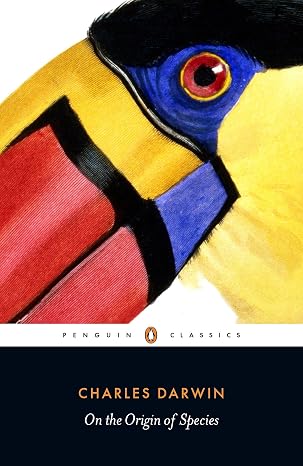
On the Origin of Species Summary
By Charles Darwin
By Means of Natural Selection, or the Preservation of Favoured Races in the Struggle for Life
Summary preview
I ask you to look at the living world not as a fixed gallery of forms, each made once and kept forever the same, but as a scene full of quiet change, long inheritance, constant struggle, and gradual shaping. That is the heart of On the Origin of Species. Its purpose is not merely to say that plants and animals vary, for every breeder and every gardener knows that. Its deeper purpose is to show how small differences, if preserved through many generations, may give rise to the great diversity of life we see around us. A field of grass, a kennel of dogs, a hedge full of birds, a rocky shore, an island with its own curious inhabitants, all become parts of one vast history. Charles Darwin begins from a plain and practical place. He does not first ask us to believe anything extraordinary. He starts with familiar facts, with pigeons, domestic animals, cultivated plants, and the power of human selection. If people can produce striking changes in a few generations by choosing which individuals shall breed, what might nature do over immense stretches of time, where every climate, every enemy, every shortage of food, and every rival acts as a kind of selector? From this simple comparison grows a bold idea. Nature, too, selects. It preserves useful variations and destroys harmful ones. This process, which he calls natural selection, becomes the main thread running through the whole book. Yet the book is not only an argument about mechanism. It is also an effort to explain many scattered facts that once seemed separate and strange. Why do island species resemble those of the nearest continent, though they differ in curious ways? Why do embryos of very different creatures look alike at early stages? Why do some animals carry useless or half useless organs, such as hidden bones or tiny rudiments? Why does the fossil record show both appearance and disappearance, while still seeming so imperfect and broken? Why do the natural groupings used by naturalists fit so well with the idea of descent from common ancestors? The work gathers all these puzzles and tries to show that they are not isolated mysteries but connected parts of one grand account. There is a modesty in the manner of the book, though its claim is immense. Again and again, the writer admits difficulties, gaps, and objections. He does not pretend that every problem is solved. Rather, he invites the reader to weigh many lines of evidence together. By the end, life appears not as a collection of separate acts, but as a branching, ancient, and deeply related process. What seems at first like endless variety comes to be seen as family likeness spread through time, altered by circumstance, and refined by survival. The book asks for patience, close observation, and a willingness to let ordinary causes, working over extraordinary ages, produce extraordinary results.
Sign up to continue reading
Get access to full book summaries, audio of the summaries, and many more.
Similar Books
Books with a similar vibe—explore more like this.
Every Living Thing
Jason Roberts
The Great and Deadly Race to Know All Life
4.8 (7) mins
Brain Wash
David Perlmutter
Detox Your Mind for Clearer Thinking, Deeper Relationships, and Lasting Happiness
4.6 (1203)29 mins
The Light Eaters
Zoë Schlanger
How the Unseen World of Plant Intelligence Offers a New Understanding of Life on Earth
4.6 (527)21 mins
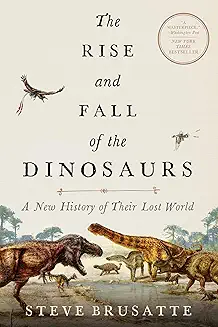
The Rise and Fall of the Dinosaurs
Steve Brusatte
A New History of a Lost World
4.5 (937)27 mins
Novacene
James Lovelock
The Coming Age of Hyperintelligence
4.4 (554)25 mins
The Book of Humans
Adam Rutherford
A Brief History of Culture, Sex, War and the Evolution of Us
4.4 (627)26 mins
Finding the Mother Tree
Suzanne Simard
Discovering the Wisdom of the Forest
4.3 (351)28 mins
Not the End of the World
Hannah Ritchie
How We Can Be the First Generation to Build a Sustainable Planet
4.3 (263)20 mins
Crush
James Riordon
Close Encounters with Gravity
4.2 (11)20 mins
Guns, Germs, and Steel
Jared Diamond
The Fates of Human Societies
4.1 (347)16 mins