
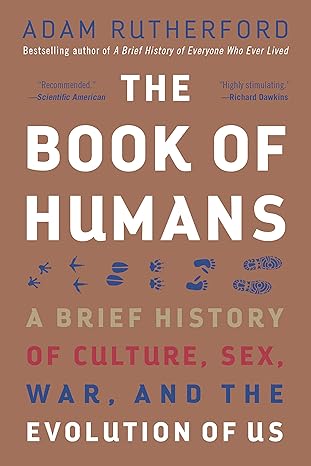
The Book of Humans Summary
By Adam Rutherford
A Brief History of Culture, Sex, War and the Evolution of Us
Summary preview
What kind of creature are you, really? That is the delightfully slippery question at the heart of The Book of Humans. It looks at us not as masters of the planet standing apart from nature, but as one strange ape among many, stitched together by evolution, history, sex, culture, luck, and a talent for telling stories about ourselves. The great trick of the book is that it takes ideas we think we know already, such as intelligence, love, violence, race, language, beauty, and family, and turns them around in the light. Suddenly they look less fixed, less noble, and often much more interesting. The guiding thought is simple. Humans are not special in every way we like to imagine. Many things we proudly claim as uniquely ours are found elsewhere in the animal kingdom, at least in part. Other traits that really do stand out in our species are not always the ones we celebrate. We are extraordinary, yes, but in a messy, contingent way. We are the products of deep time and tiny genetic tweaks, of bodies shaped by ancient environments, and of cultures powerful enough to remake the meaning of our biology. Adam Rutherford keeps returning to this tension. Nature matters. Nurture matters. History matters. And the line between them is usually a blur. What makes the book so enjoyable is the tone. It is full of scientific evidence, but it never sounds like a lecture. It sounds like a clever, curious companion walking beside you, pointing out the oddness of your own species. Why are human babies so helpless? Why do we have such large brains if they cost so much to grow and maintain? Why are our bodies bad at birth, bad at backs, and bad at dealing with sugar and abundance? Why do we sort ourselves into categories that biology does not really support? Why do we care so much about stories, sex, status, and belonging? These questions are handled with wit, but also with care, especially when the topic touches real suffering, inequality, or the misuse of science. Running through the whole book is a warning against easy myths. We love neat explanations. We love the idea that genes determine destiny, or that one sex is naturally one way and the other sex another, or that races are ancient biological truths, or that civilization has somehow lifted us beyond our animal past. But the evidence is rarely so tidy. Human life is full of trade offs, compromises, and evolutionary leftovers. We are clever enough to split the atom and silly enough to invent fake hierarchies from skin colour. We are biological beings who live in symbolic worlds. So the book invites you to see humanity with fresh eyes. Not as fallen angels, not as perfect machines, and not as detached minds floating above flesh, but as animals with culture. Peculiar animals, inventive animals, anxious animals, cooperative animals. The story that follows is about how we became that way, and what that says about the...
Sign up to continue reading
Get access to full book summaries, audio of the summaries, and many more.
Similar Books
Books with a similar vibe—explore more like this.
Every Living Thing
Jason Roberts
The Great and Deadly Race to Know All Life
4.8 (7) mins
Brain Wash
David Perlmutter
Detox Your Mind for Clearer Thinking, Deeper Relationships, and Lasting Happiness
4.6 (1203)29 mins
The Light Eaters
Zoë Schlanger
How the Unseen World of Plant Intelligence Offers a New Understanding of Life on Earth
4.6 (527)21 mins
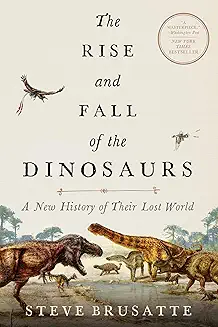
The Rise and Fall of the Dinosaurs
Steve Brusatte
A New History of a Lost World
4.5 (937)27 mins
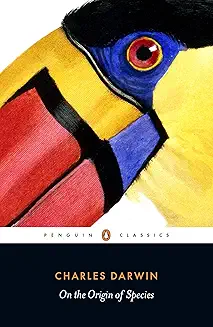
On the Origin of Species
Charles Darwin
By Means of Natural Selection, or the Preservation of Favoured Races in the Struggle for Life
4.5 (784)32 mins
The Laws of Human Nature
Robert Greene
What affects your day-to-day life
4.4 (940)32 mins
Novacene
James Lovelock
The Coming Age of Hyperintelligence
4.4 (554)25 mins
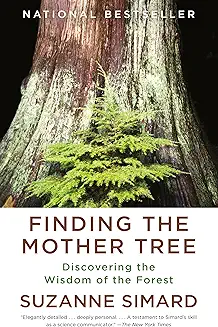
Finding the Mother Tree
Suzanne Simard
Discovering the Wisdom of the Forest
4.3 (351)28 mins
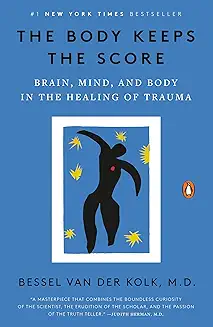
The Body Keeps the Score
Bessel van der Kolk
Mind, Brain and the Body in the Transformation of Trauma
4.3 (798)28 mins
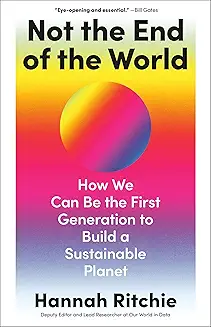
Not the End of the World
Hannah Ritchie
How We Can Be the First Generation to Build a Sustainable Planet
4.3 (263)20 mins