
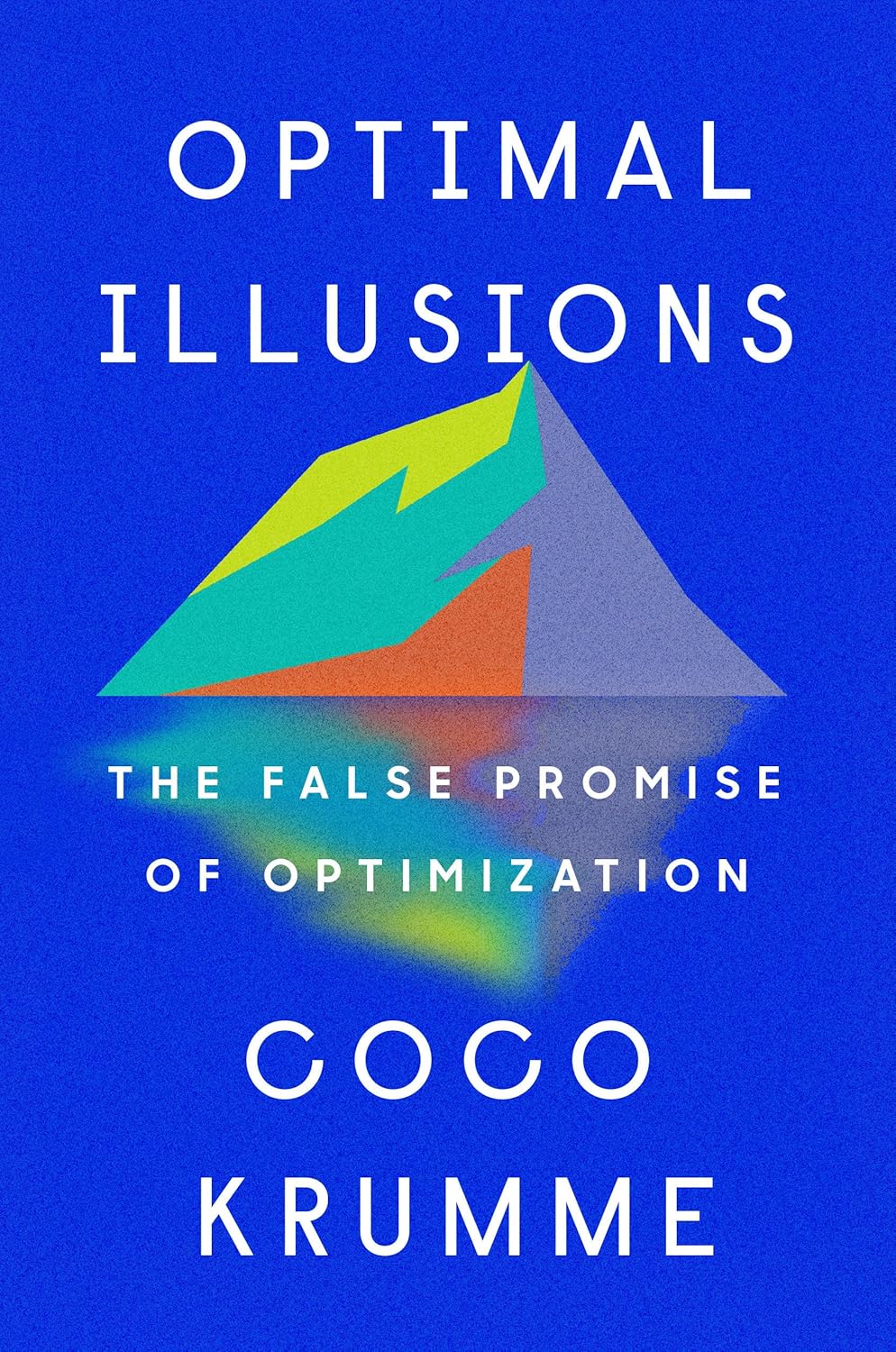
Optimal Illusions Summary
By Coco Krumme
The False Promise of Optimization
Summary preview
We like to believe that if we gather enough data, build clever enough models, and optimize hard enough, life will become smoother, fairer, and more efficient. That dream is seductive. It promises clean answers to messy problems. It tells us that disease can be managed, cities can be streamlined, markets can be stabilized, and human behavior can be gently guided into better patterns. In Optimal Illusions, Coco Krumme takes that dream seriously enough to test it, and then boldly enough to question it. The book begins with a personal fascination that grows into a much larger inquiry. What happens when mathematics leaves the page and enters the bloodstream of everyday life. What happens when optimization, a tool designed to find the best possible outcome under a set of rules, becomes not just a technical method but a cultural mindset. We start using it to shape medicine, technology, economics, public policy, and even our own bodies. We come to see the world as a system that can be tuned. But as that mindset spreads, something strange happens. The very tools meant to create order can generate brittleness, blindness, and harm. What makes this exploration vivid is that it is never only abstract. It moves through hospitals, laboratories, computer models, and public systems. It also moves through the intimate places where numbers meet flesh, fear, hope, and uncertainty. The book asks us to notice that optimization is never neutral. Every model chooses what counts. Every metric leaves something out. Every attempt to define the best outcome contains a hidden philosophy about what kind of life matters. At its heart, this is a book about limits. Not the limits of intelligence or ambition, but the limits of control. We can optimize for speed and lose resilience. We can optimize for efficiency and lose justice. We can optimize for precision and lose wisdom. The world is not a closed machine with stable rules. It is alive, tangled, nonlinear, and full of feedback loops. Human beings are not variables that sit still while we solve for them. So the book becomes both a critique and an invitation. It critiques the modern faith that better algorithms will save us from complexity. And it invites a different way of thinking, one that respects uncertainty, variation, adaptation, and the stubborn irreducibility of lived experience. Rather than rejecting science or math, it asks for a humbler science and a more humane math. It asks us to use tools without becoming trapped inside their logic. By the end, the real subject is not only optimization. It is the tension between neat systems and messy life. It is the danger of mistaking a model for the world. And it is the possibility that what keeps us healthiest, safest, and most fully human may not be perfect optimization at all, but the capacity to live well amid unpredictability.
Sign up to continue reading
Get access to full book summaries, audio of the summaries, and many more.
Similar Books
Books with a similar vibe—explore more like this.
Othello
William Shakespeare
Love, Betrayal, and the Fall of a Hero
4.8 (14)22 mins
The Gift of Not Belonging
Rami Kaminski
How Outsiders Thrive in a World of Joiners
4.7 (89)22 mins
Once Upon a Stranger
Gillian Sandstrom
The Science of How Small Talk Can Add Up to a Big Life
4.7 (21)22 mins

The Science of Revenge
James Kimmel, Jr.
Understanding the World's Deadliest Addiction - and How to Overcome It
4.6 (21)24 mins
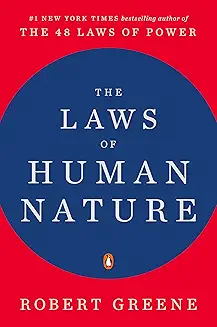
The Laws of Human Nature
Robert Greene
What affects your day-to-day life
4.4 (940)32 mins
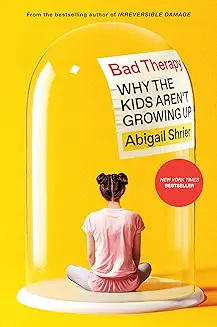
Bad Therapy
Abigail Shrier
Why the Kids Aren't Growing Up
4.4 (629)22 mins
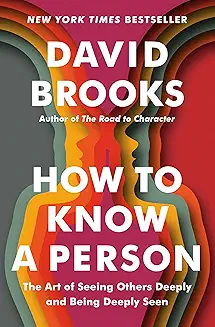
How to Know a Person
David Brooks
The Art of Seeing Others Deeply and Being Deeply Seen
4.4 (692)26 mins
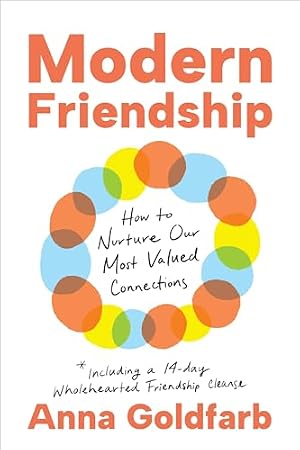
Modern Friendship
Anna Goldfarb
How to Nurture Our Most Valued Connections
4.3 (8)21 mins
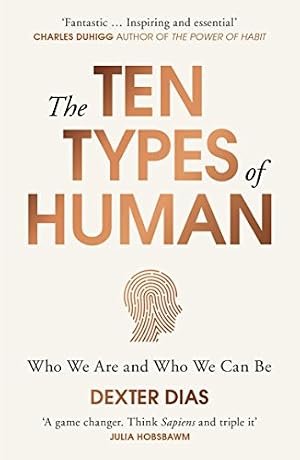
The Ten Types of Human
Dexter Dias
A New Understanding of Who We Are, and Who We Can Be
4.2 (25)22 mins
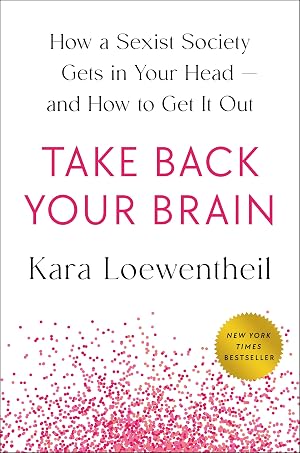
Take Back Your Brain
Kara Loewentheil
How a Sexist Society Gets in Your Head - and How to Get It Out
3.6 (33)21 mins