

Waking Up Summary
By Sam Harris
A Guide to Spirituality Without Religion
Summary preview
Most people move through life with a feeling they rarely question. It seems obvious that there is a self at the center of experience, a thinker inside the head, an owner of thoughts, a rider on the rush of perception and emotion. We assume that happiness waits somewhere in the future if we can only arrange the right conditions. We assume that spiritual life belongs to religion, and that without faith, dogma, and ancient metaphysics there is little to say about inner transformation. Waking Up is written to challenge all of that. The book begins from a simple but radical claim. There are truths to be discovered about the mind through direct experience, and these truths do not depend on believing in God, souls, miracles, or sacred history. The deepest insights found in traditions like Buddhism, Advaita, and other contemplative paths can be tested in the laboratory of your own consciousness. If you pay attention closely enough, you may find that the self you spend your life defending is more like a useful illusion than a solid fact. You may also find that freedom is available not merely at the end of a long moral drama, but in the texture of the present moment. Sam Harris writes as someone who has spent years with meditation teachers, neuroscientists, philosophers, and religious texts, and who has also remained suspicious of supernatural claims. That combination gives the book its special force. It is both intimate and skeptical, open to wonder yet unwilling to pretend. The goal is not to convert you to a new creed. It is to invite you into an examination of mind that is as practical as learning to see. The book moves through several linked questions. What is the difference between religion and spirituality. Why do human beings so often become trapped in thought, emotion, and habit. What happens when attention turns back on itself. Why does the sense of being a separate self feel so natural, and why can it vanish under close inspection. What can practices like mindfulness reveal about suffering, compassion, free will, and death. Along the way, the argument keeps returning to a central discovery. The quality of your life is shaped less by what happens than by how consciousness meets what happens. This is not a promise of constant bliss. It is a call to wake up from confusion that is so familiar it often feels like sanity. The invitation is to notice consciousness itself before it gets covered by thought, to recognize that anger, craving, anxiety, and pride are appearances in the mind rather than the core of who you are, and to see that spiritual insight can stand on its own without myths to protect it. What follows is a map of that possibility, grounded in experience, sharpened by reason, and aimed at one of the oldest human questions. What would it mean to be truly free right now.
Sign up to continue reading
Get access to full book summaries, audio of the summaries, and many more.
Similar Books
Books with a similar vibe—explore more like this.
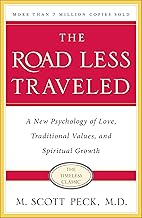
The Road Less Traveled
M. Scott Peck
A New Psychology of Love, Traditional Values and Spiritual Growth
4.4 (1249)22 mins
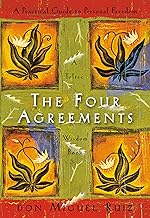
The Four Agreements
Don Miguel Ruiz & Janet Mills
A Practical Guide to Personal Freedom
4.3 (913)21 mins
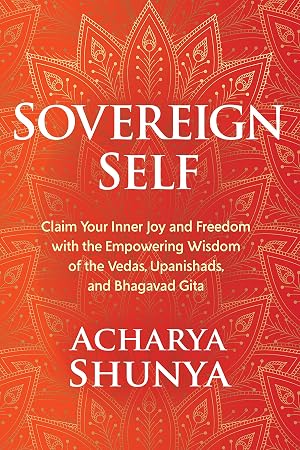
Sovereign Self
Acharya Shunya
Claim Your Inner Joy and Freedom with the Empowering Wisdom of the Vedas, Upanishads, and Bhagavad Gita
4.8 (114) mins
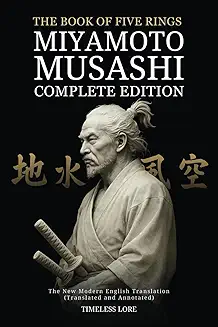
The Book of Five Rings
Miyamoto Musashi
A Classic Text on the Japanese Way of the Sword
4.7 (293)23 mins

Uncle Tom's Cabin
Harriet Beecher Stowe
The Problem of Slavery and Its Treatment of Human Beings
4.7 (41)25 mins
Psychological Types
Carl Jung
Collected works from the supreme theorist of the conscious
4.7 (89) mins

The Seven Circles
Chelsey Luger & Thosh Collins
Indigenous Teachings for Living Well
4.7 (13)29 mins
Every Time I Find the Meaning of Life, They Change It
Daniel Klein
Wisdom of the Great Philosophers on How to Live
4.7 (28)25 mins
How to Be a Stoic
Massimo Pigliucci
Ancient Wisdom For Modern Living
4.6 (567)31 mins
Aristotle's Way
Edith Hall
How Ancient Wisdom Can Change Your Life
4.6 (1073)28 mins