
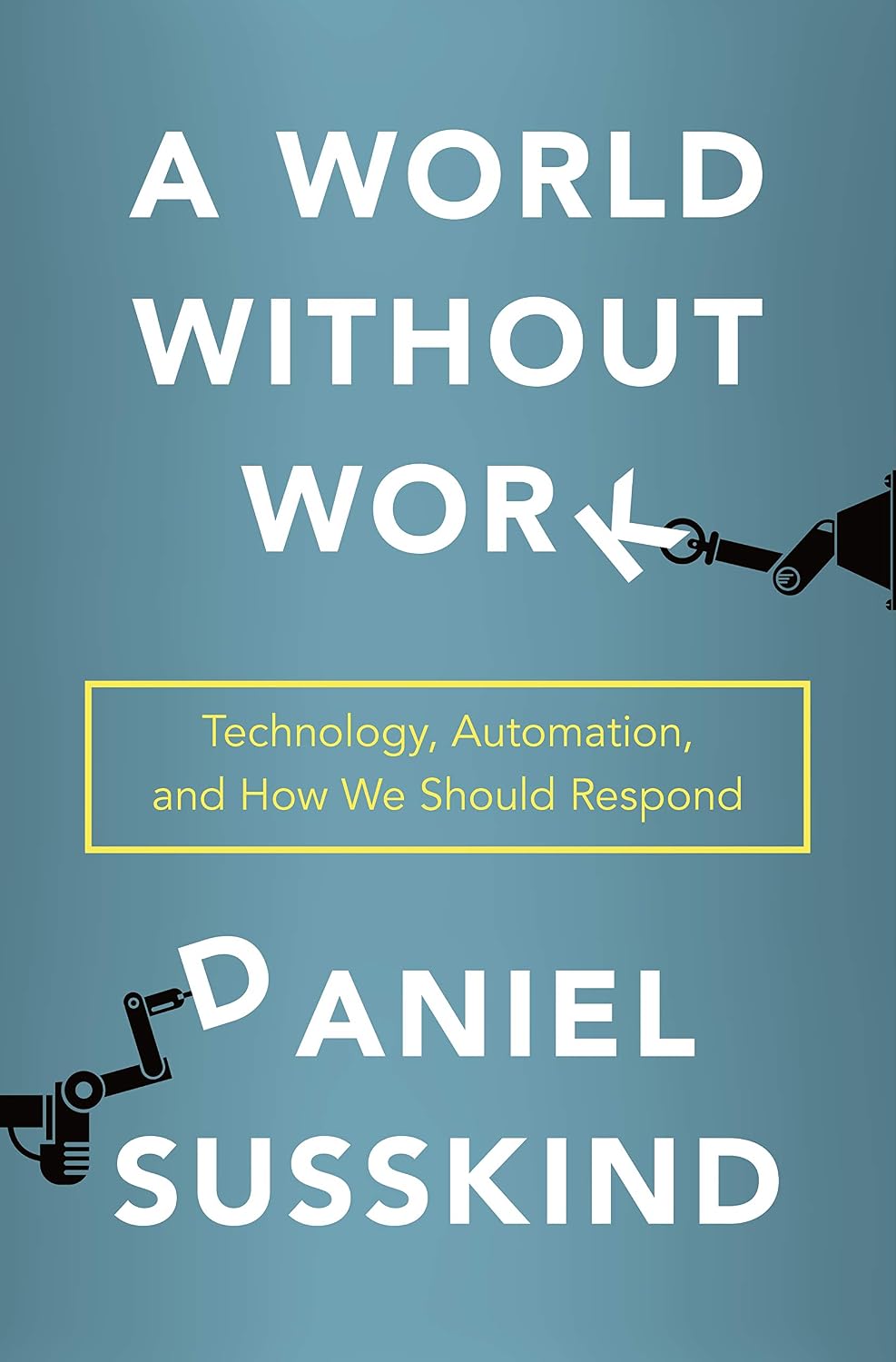
A World Without Work Summary
By Daniel Susskind
Technology, Automation, and How We Should Respond
Summary preview
Work has long been the quiet organizer of our lives. It shapes our days, gives us an income, often gives us status, and for many people it also gives a sense of purpose. We build schools to prepare children for it, design cities around commuting to it, and judge whole economies by how much of it they create. That is why the idea of a world with much less work feels so unsettling. It is not just a change in the labor market. It is a challenge to one of the main ways modern societies understand themselves. That is the problem at the heart of Daniel Susskind’s book. He asks what happens if technological progress does not simply change jobs, but steadily takes over more and more of the tasks people once did better than machines. The fear that machines will replace workers is not new. People have worried about it for centuries. Yet the argument here is sharper and more ambitious. The claim is not that everyone will suddenly become jobless tomorrow. It is that we are moving toward a future where there may simply not be enough work, especially the sort of well paid work that gives large numbers of people a decent place in economic life. What makes this account so compelling is that it does not rely on science fiction. It grows out of trends already visible around us. Software writes, recommends, predicts, translates, diagnoses, drives, and allocates. Machines are no longer just replacing muscle. They are beginning to take on forms of judgment, pattern recognition, and decision making that once seemed deeply human. And when that happens, the old comforting story about technology creating as many jobs as it destroys starts to look less secure. Still, this is not a book of panic. It is a book of preparation. The real task is not to guess the exact date when the future arrives. It is to think seriously about what kind of society we want if work becomes scarcer, more unequal, and less central than it has been. That means asking hard questions about income, dignity, education, politics, and meaning. If paid employment can no longer do all the social work we have asked of it, what institutions will take its place? The journey that follows moves from the history of technological anxiety to the economics of labor, from the rise of inequality to the deeper moral challenge of living well in a world where employment may no longer be the main source of identity. It is a sober argument, but also a hopeful one. If we can look clearly at what may be coming, we may be able to build a future that is not only more prosperous, but also more humane.
Sign up to continue reading
Get access to full book summaries, audio of the summaries, and many more.
Similar Books
Books with a similar vibe—explore more like this.
This Is How They Tell Me the World Ends
Nicole Perlroth
The Cyberweapons Arms Race
4.8 (64)33 mins

Cobalt Red
Siddharth Kara
How the Blood of the Congo Powers Our Lives
4.6 (4) mins
Blockchain Revolution
Don Tapscott & Alex Tapscott
How the Technology Behind Bitcoin Is Changing Money, Business and the World
4.5 (483)26 mins

Technofeudalism
Yanis Varoufakis
What Killed Capitalism
4.5 (39) mins
AI Superpowers
Kai-Fu Lee
China, Silicon Valley, and the New World Order
4.4 (982)31 mins
Weapons of Math Destruction
Cathy O'Neil
How Big Data Increases Inequality and Threatens Democracy
4.3 (1617)20 mins
Growth
Daniel Susskind
A History and a Reckoning
4.3 (11) mins

Chokepoints
Edward Fishman
How the Global Economy Became a Weapon of War
4.3 (16) mins
Subscribed
Tien Tzuo with Gabe Weisert
Why the Subscription Model Will Be Your Company's Future – and What to Do About It
4.3 (32) mins

Streaming Wars
Charlotte Henry
How Getting Everything We Wanted Changed Entertainment Forever
4.3 (3)23 mins