
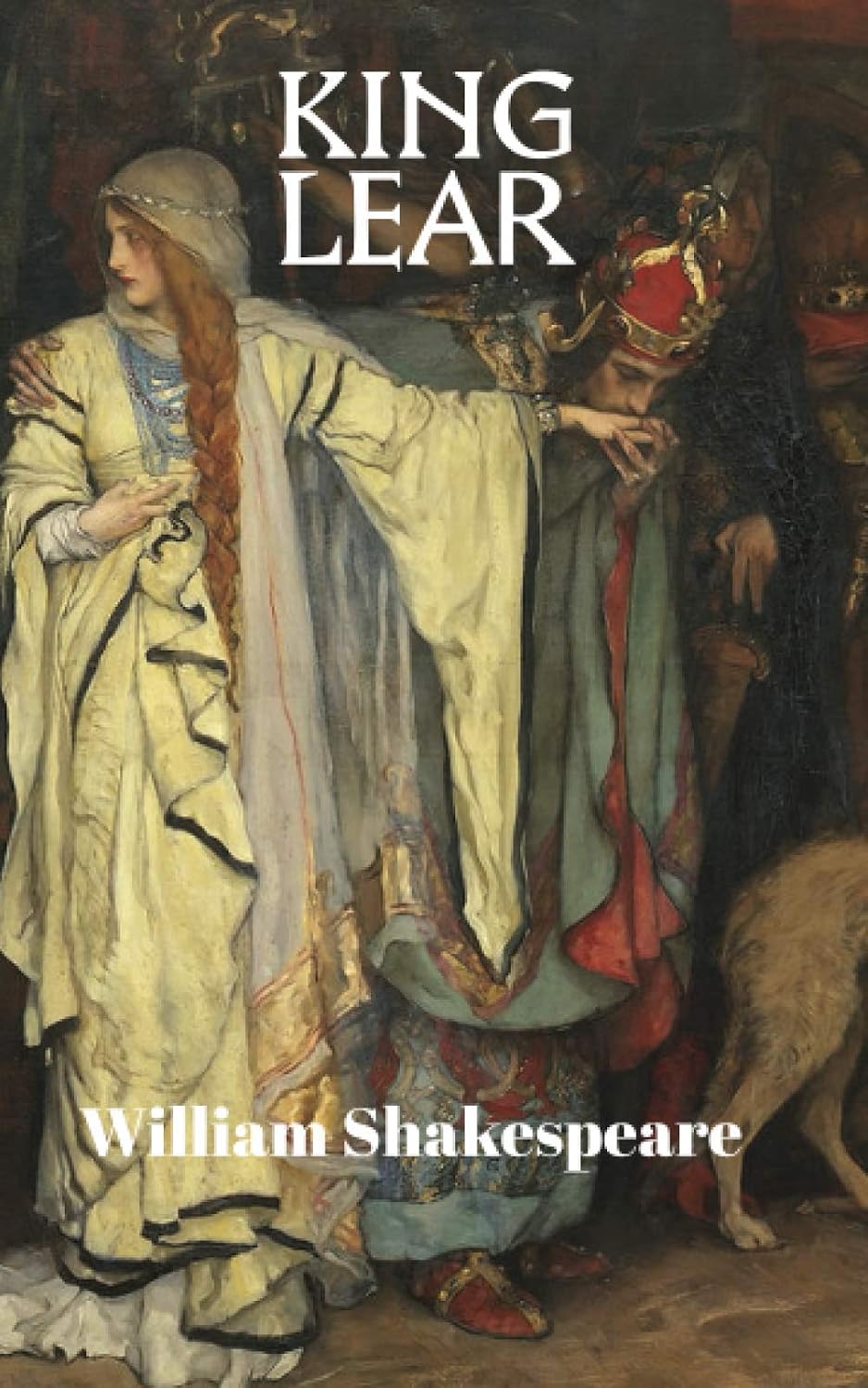
King Lear Summary
By William Shakespeare
All he wanted was love. What he got was chaos.
Summary preview
Here is a play that feels as wide as a stormy sky and as sharp as a knife turned inward. "King Lear" begins with an old ruler who wants ease, love, and ceremony all at once. He plans to give up the daily burden of rule while keeping the name and honor of a king. What he asks in return seems simple enough. He wants his three daughters to say how much they love him. Yet from that demand, nearly everything breaks. A family becomes a battlefield. A kingdom becomes a wilderness. People who should protect one another begin to hunt, flatter, betray, blind, and destroy. At the heart of the story is a painful question. What happens when power listens only to praise and cannot bear the plain truth? Lear mistakes performance for love. He trusts loud words and rejects quiet honesty. His youngest daughter, Cordelia, refuses to dress her love in false speech, saying only what she truly feels. For that, he casts her out. From that moment, the world of the play starts to tilt. The old order weakens, and what was hidden inside people comes rushing out. Yet this is not only Lear's story. Running beside it is another family tragedy. The Earl of Gloucester is deceived by his wicked son Edmund and turns against his loyal son Edgar. This second plot mirrors the first so closely that it deepens everything. Fathers fail to see. Children wear masks. The good are pushed into exile. The cruel rise by lies. Through these doubled wounds, the play shows how blindness is both moral and literal. Men who think they understand everything are often the ones who see least. Still, this is not a cold lesson. It is a fierce, living drama full of sorrow, fury, tenderness, and strange flashes of dark laughter. The Fool speaks truth through jest. Edgar survives by disguise. Kent serves in loyalty even after banishment. And Lear himself, proud, raging, broken, and finally awakened, becomes one of the most moving figures ever set on a stage. As he loses rank, shelter, and reason, he begins at last to see other people clearly, especially the poor and powerless whom he ignored when he sat secure on his throne. William Shakespeare makes this world feel huge. Courtly speeches give way to mad cries in the wind. Palaces open into heath and hovel. Public law collapses into private cruelty. By the end, the play asks whether justice lives anywhere in human affairs, and whether love can survive in a world that rewards deceit. It offers no easy comfort. But it gives something deeper. It shows, with unforgettable force, how pride can ruin a life, how suffering can strip away illusion, and how truth, though rejected, remains the one thing worth hearing.
Sign up to continue reading
Get access to full book summaries, audio of the summaries, and many more.
Similar Books
Books with a similar vibe—explore more like this.
Othello
William Shakespeare
Love, Betrayal, and the Fall of a Hero
4.8 (14) mins

Beethoven
Laura Tunbridge
A Life in Nine Pieces
4.7 (24)34 mins
The Gift of Not Belonging
Rami Kaminski
How Outsiders Thrive in a World of Joiners
4.7 (89) mins

Once Upon a Stranger
Gillian Sandstrom
The Science of How Small Talk Can Add Up to a Big Life
4.7 (21) mins

The Seven Circles
Chelsey Luger & Thosh Collins
Indigenous Teachings for Living Well
4.7 (13) mins
Habits of a Peacemaker
Steven T. Collis
10 Habits to Turn Toxic Conversations Into Healthy Dialogues
4.7 (9)22 mins

Silas Marner
George Eliot
Uncover a Rich Tapestry of Love, Hope, and Redemption
4.6 (7) mins
The Watchman's Rattle
Rebecca D. Costa
Thinking Our Way Out of Extinction
4.6 (10) mins

The Stranger
Albert Camus
A Philosophical Journey Into Alienation
4.6 (64) mins

The Rebel
Albert Camus
An Essay on Man in Revolt
4.6 (21) mins