
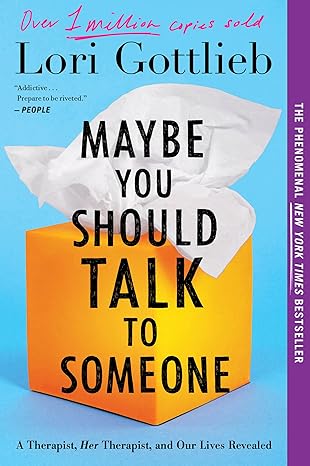
Maybe You Should Talk to Someone Summary
By Lori Gottlieb
A Therapist, Her Therapist, and Our Lives Revealed
Summary preview
What happens when the person who helps everyone else fall apart is suddenly the one sitting on the bathroom floor, stunned, raging, and unable to make sense of her own life? That is the deliciously human starting point of Maybe You Should Talk to Someone, where Lori Gottlieb opens the door to her therapy office and, with equal honesty, opens the door to her own mind. The book is part memoir, part behind the scenes look at psychotherapy, and part love letter to the messy, often humiliating business of being alive. At first glance, the setup feels almost comic. A therapist gets dumped. Not by a husband of twenty years or a dramatic lover with a long trail of betrayal, but by a man she thought might become her future. The breakup is abrupt, almost absurd in its trigger, and yet it detonates something enormous inside her. Suddenly all the knowledge she offers patients about grief, loss, expectation, and resilience becomes very hard to use on herself. She knows the language of healing, but knowledge alone does not protect anyone from pain. If anything, it can make denial look more polished. So she does what many people do only after every internal defense has failed. She finds a therapist. His name is Wendell, and from the first session he becomes both a guide and a mirror, patient enough to tolerate her resistance and sharp enough to see through it. As she sits in his office trying to explain why her suffering is reasonable, singular, and not at all like everyone else’s, she is also sitting across from her own patients as they tell themselves versions of the same story. That double vision is the beating heart of the book. We move between her life and the lives of several patients she treats, each carrying a different form of sorrow, fear, or confusion. There is John, a swaggering television producer with a terminal diagnosis who uses fury as armor. There is Julie, a young newlywed with a history of self sabotage and a need to make every choice feel urgent. There is Charlotte, who seems to have everything except the partner and child she believes will finally make her life complete. And there is Rita, wise and observant, who arrives after devastating losses and somehow brings an unusual kind of strength into the room. What unfolds is not a neat lesson about self improvement. It is a richer, stranger truth about how people change. We do not transform because someone gives us advice. We change when we feel seen enough to tell the truth, when our fantasies crack, when grief softens into acceptance, and when we realize that our symptoms are often stories asking to be heard. This book invites you into those moments with humor, tenderness, and startling recognition. It reminds you that therapy is not about fixing broken people. It is about helping ordinary people face the life they have, not the life they imagined, and discovering that this...
Sign up to continue reading
Get access to full book summaries, audio of the summaries, and many more.
Similar Books
Books with a similar vibe—explore more like this.
Othello
William Shakespeare
Love, Betrayal, and the Fall of a Hero
4.8 (14) mins
We Have Always Lived in the Castle
Shirley Jackson
Enter a Disturbing Labyrinth of Family Secrets and Dark Neurosis
4.8 (5) mins
The Gift of Not Belonging
Rami Kaminski
How Outsiders Thrive in a World of Joiners
4.7 (89) mins
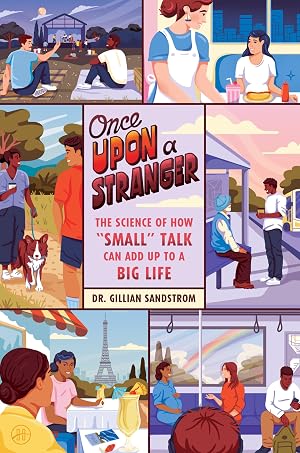
Once Upon a Stranger
Gillian Sandstrom
The Science of How Small Talk Can Add Up to a Big Life
4.7 (21) mins
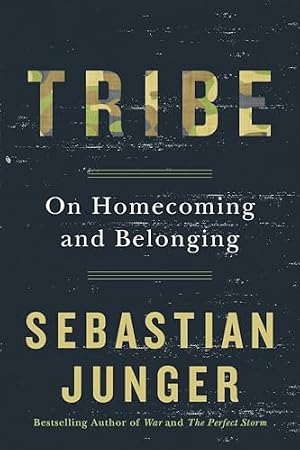
Tribe
Sebastian Junger
On Homecoming and Belonging
4.7 (17) mins
My Grandmother's Hands
Resmaa Menakem
Racialized Trauma and the Pathway to Mending Our Hearts and Bodies
4.6 (167)30 mins

The War For Kindness
Jamil Zaki
Building Empathy in a Fractured World
4.6 (78)25 mins
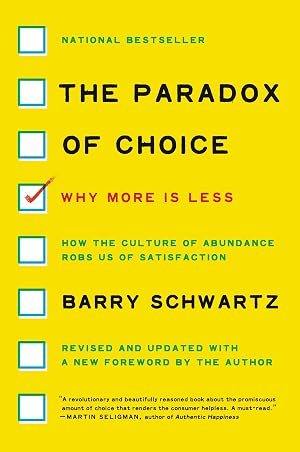
The Paradox of Choice
Barry Schwartz
Why More Is Less
4.6 (130) mins

The Science of Revenge
James Kimmel, Jr.
Understanding the World's Deadliest Addiction - and How to Overcome It
4.6 (21)24 mins
Brave New World
Aldous Huxley
A Dystopian Novel on the Perils of State Control & New Technology
4.5 (1231)26 mins