
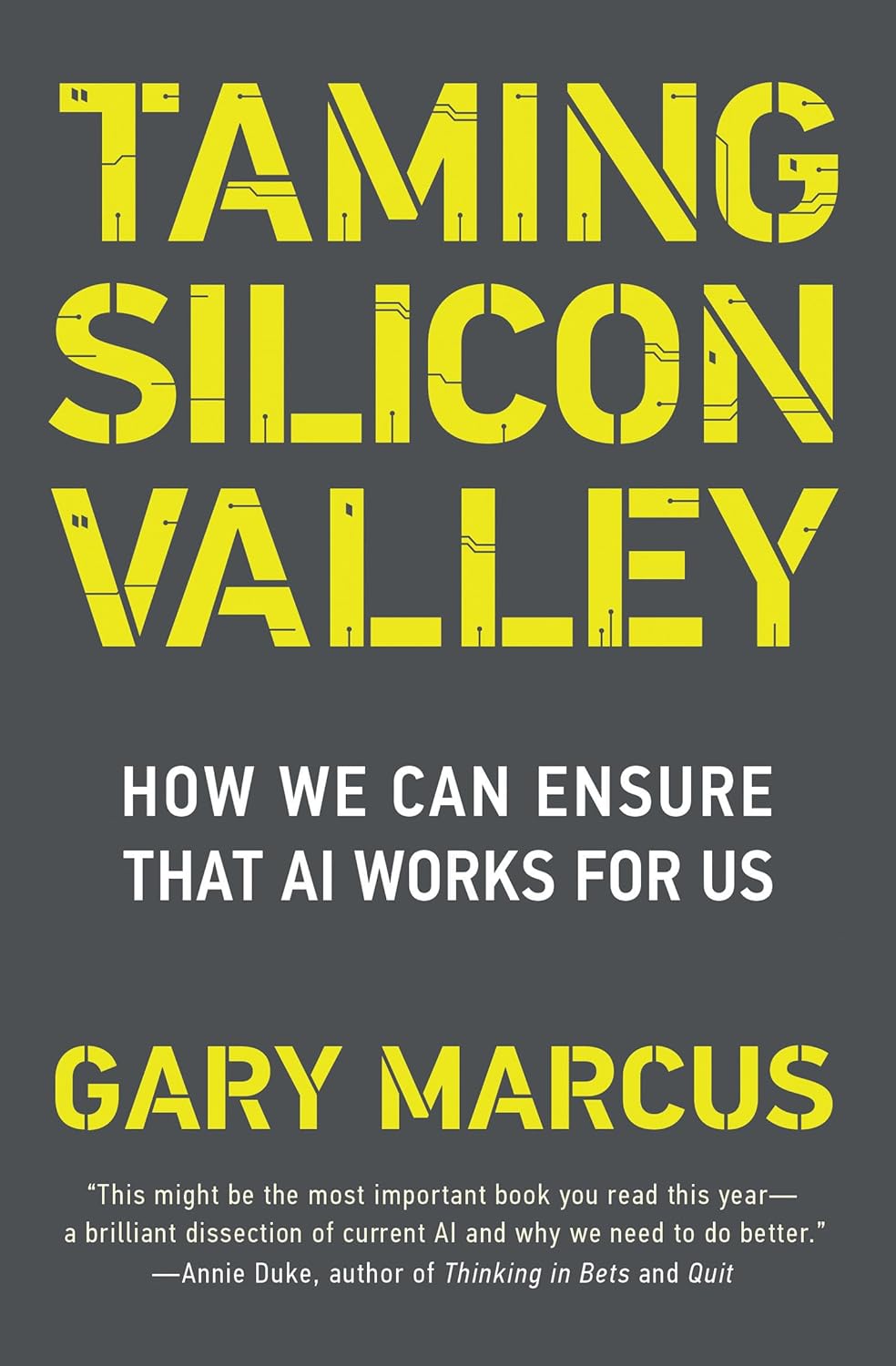
Taming Silicon Valley Summary
By Gary F. Marcus
How We Can Ensure That AI Works for Us
Summary preview
Taming Silicon Valley is a plea, a warning, and a practical roadmap all at once. At its heart, the book asks a blunt question. What happens when a handful of technology companies move faster than the laws, norms, and democratic institutions that are supposed to keep power in check. The answer, as Gary F. Marcus lays it out, is not abstract. It shows up in broken privacy, manipulated attention, damaged public trust, labor disruption, reckless deployment of artificial intelligence, and a culture that too often treats human consequences as bugs to patch later. The book is not anti technology. Far from it. It comes from someone who believes deeply in invention, scientific progress, and the life changing potential of digital tools. But it is also shaped by frustration with a familiar Silicon Valley story. Build first. Scale fast. Ask forgiveness later. Wrap it all in the language of openness, disruption, and optimism. Then, when harms appear, claim neutrality or inevitability. That story, the book argues, has become dangerous. It has allowed private actors to accumulate extraordinary influence over communication, commerce, culture, and even the future of intelligence itself without anything like the level of accountability we expect in other powerful industries. What makes the book vivid is that it never stays in slogans. It moves through concrete failures and structural problems. Social media systems amplify outrage and misinformation because engagement is profitable. Data collection becomes surveillance because the business model rewards ever deeper extraction. Artificial intelligence is sold with grand promises, yet often released with weak safeguards, thin transparency, and too much faith that market incentives alone will sort out the risks. Again and again, the same pattern appears. Companies frame themselves as visionary pioneers while sidestepping responsibilities that would be obvious in medicine, aviation, finance, or transportation. The book also resists the easy fantasy that one heroic founder, one better app, or one sudden technical breakthrough will fix everything. The real issue is governance. How should democratic societies set rules for systems that shape billions of lives. What obligations should platforms, AI labs, investors, and executives carry when their decisions produce social harms at enormous scale. How can law catch up without smothering useful innovation. Those are the questions driving every chapter. Along the way, the argument becomes more personal and more urgent. This is about children online, workers displaced or monitored by algorithms, citizens misled by synthetic media, and communities affected by decisions made in boardrooms far away. It is also about the future we are sleepwalking into if we keep treating technological power as self justifying. The core message is simple but demanding. Innovation needs adult supervision. If we want the benefits of technology without surrendering public life to a few unaccountable firms, we have to build rules, institutions, and expectations strong enough to tame the valley before the valley remakes us.
Sign up to continue reading
Get access to full book summaries, audio of the summaries, and many more.
Similar Books
Books with a similar vibe—explore more like this.

Cobalt Red
Siddharth Kara
How the Blood of the Congo Powers Our Lives
4.6 (4)22 mins

Technofeudalism
Yanis Varoufakis
What Killed Capitalism
4.5 (39)24 mins

Growth
Daniel Susskind
A History and a Reckoning
4.3 (11)23 mins

Chokepoints
Edward Fishman
How the Global Economy Became a Weapon of War
4.3 (16)22 mins

Streaming Wars
Charlotte Henry
How Getting Everything We Wanted Changed Entertainment Forever
4.3 (3)23 mins

2030
Mauro F. Guillén
How Today's Biggest Trends Will Collide and Reshape the Future of Everything
4.1 (368)27 mins
Power and Progress
Daron Acemoglu & Simon Johnson
Our Thousand-Year Struggle Over Technology and Prosperity
4.0 (389)24 mins
Too Smart
Jathan Sadowski
How Digital Capitalism Is Taking Over the World
4.0 (46)25 mins
The Technology Trap
Carl Benedikt Frey
Capital, Labor, and Power in the Age of Automation
3.9 (734)18 mins

The Age of Extraction
Tim Wu
How Tech Platforms Conquered the Economy and Threaten Our Future Prosperity
3.9 (8)25 mins