
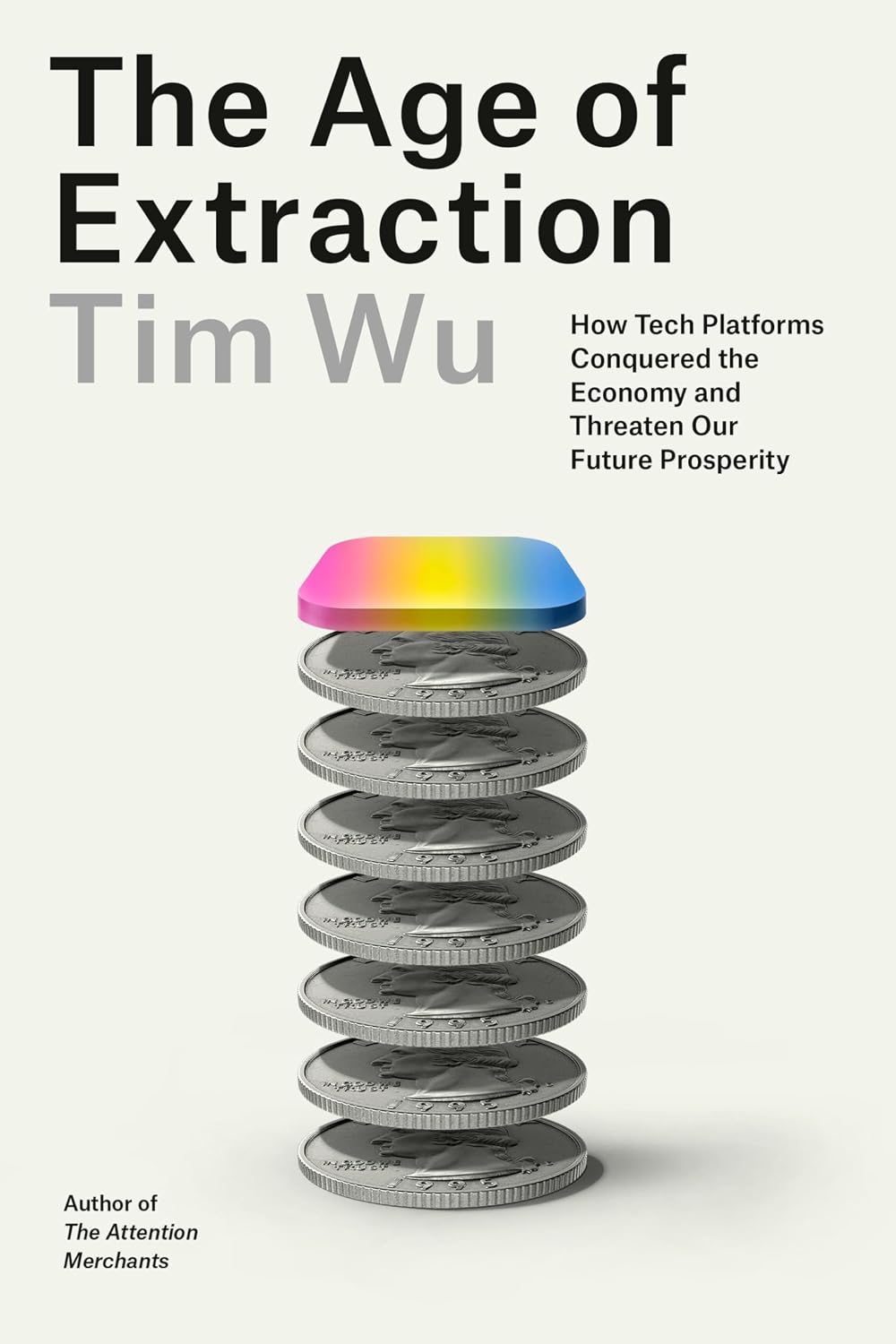
The Age of Extraction Summary
By Tim Wu
How Tech Platforms Conquered the Economy and Threaten Our Future Prosperity
Summary preview
We live inside a strange bargain. Many of the most powerful systems around us offer convenience, connection, speed, and pleasure. They help us find our way, talk to friends, buy what we need, and fill every empty minute with something to see or hear. Yet beneath that smooth surface is a deeper story about appetite, power, and taking. The Age of Extraction asks you to look past the pleasant interface and see a pattern that runs through modern life. It is the pattern of industries that do not merely serve human needs but learn to pull more and more out of us, whether that means attention, labor, money, data, or even our habits of mind. The book is not just about technology, though digital platforms stand near the center of it. It is about a recurring logic in American capitalism and beyond. First a business solves a real problem or opens a wonderful possibility. Then competition intensifies, growth becomes an obsession, and the easiest profits are no longer found in making a better product. They are found in finding something vulnerable and harvesting it harder. A company stops asking how to create value and starts asking how to capture dependence. That shift, once you see it, appears everywhere. Tim Wu traces this logic through industries old and new. He moves from natural resource extraction to mass media, from tobacco to processed food, from social media to the wider machinery of surveillance driven advertising. What links these worlds is not just greed in a general sense. It is a specific strategy. Find a human weakness, a common pool, or a captive dependency. Build systems that intensify use. Defend those systems with stories about freedom, inevitability, and consumer choice. Then make the costs harder to notice by spreading them across society. What makes the book gripping is that it does not sound like a dry theory. It feels more like being shown the hidden wiring of everyday life. Why do apps pull at you so relentlessly. Why do certain products become more extreme over time. Why do industries with brilliant engineers and vast resources so often produce things that leave people distracted, sick, or exhausted. The answer is that extraction, once normalized, becomes self reinforcing. It rewards the firm that can take the most while making the damage seem natural. Still, this is not a counsel of despair. The book insists that extraction is a choice, not fate. Societies have confronted predatory industries before. Citizens, lawmakers, reformers, and even insiders have sometimes drawn lines and changed incentives. To understand that possibility, you first need clear eyes. You need to recognize that some of the defining institutions of our age are less like helpful tools than like pumps, designed to draw out every drop they can. Once that realization settles in, the rest of the story comes into view.
Sign up to continue reading
Get access to full book summaries, audio of the summaries, and many more.
Similar Books
Books with a similar vibe—explore more like this.

Cobalt Red
Siddharth Kara
How the Blood of the Congo Powers Our Lives
4.6 (4)22 mins

Technofeudalism
Yanis Varoufakis
What Killed Capitalism
4.5 (39)24 mins
Growth
Daniel Susskind
A History and a Reckoning
4.3 (11)23 mins

Chokepoints
Edward Fishman
How the Global Economy Became a Weapon of War
4.3 (16)22 mins

Streaming Wars
Charlotte Henry
How Getting Everything We Wanted Changed Entertainment Forever
4.3 (3)23 mins
2030
Mauro F. Guillén
How Today's Biggest Trends Will Collide and Reshape the Future of Everything
4.1 (368)27 mins
Power and Progress
Daron Acemoglu & Simon Johnson
Our Thousand-Year Struggle Over Technology and Prosperity
4.0 (389)24 mins
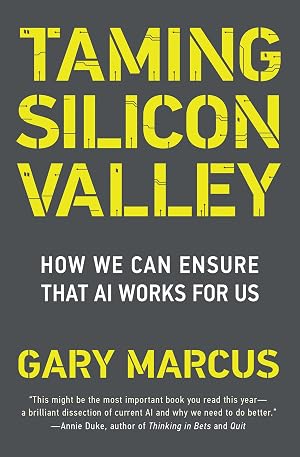
Taming Silicon Valley
Gary F. Marcus
How We Can Ensure That AI Works for Us
4.0 (11)23 mins
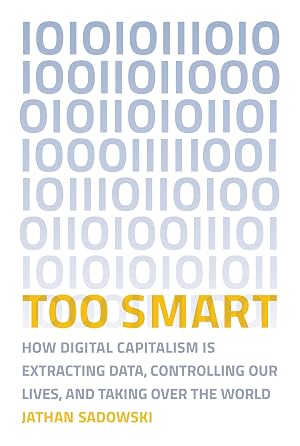
Too Smart
Jathan Sadowski
How Digital Capitalism Is Taking Over the World
4.0 (46)25 mins
The Technology Trap
Carl Benedikt Frey
Capital, Labor, and Power in the Age of Automation
3.9 (734)18 mins