
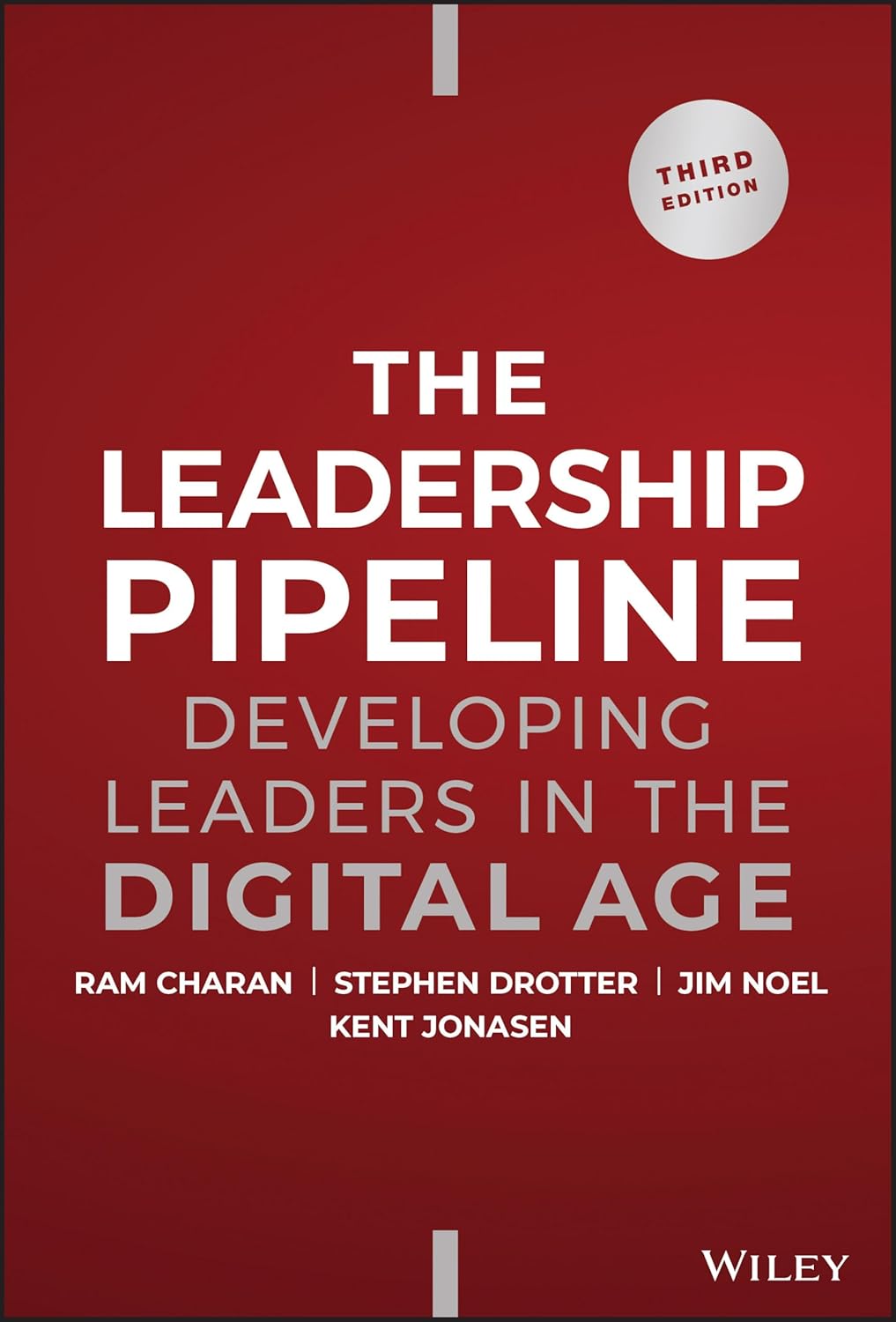
The Leadership Pipeline Summary
By Ram Charan, Stephen Drotter, James L. Noel, Kent Jonasen
Developing Leaders in the Digital Age
Summary preview
Leadership looks simple from a distance. Someone gets promoted, takes on a bigger job, and is expected to do more of what made them successful before. But that is exactly where so many careers stall and so many organizations suffer. The heart of this book is a very practical truth. Every major move in leadership asks you to become different, not just better. You cannot keep the same habits, the same use of time, and the same values, then expect to win at a larger level. That is the idea behind the leadership pipeline. It is a clear map of the passages leaders must travel as they move from managing themselves to managing others, then to managing managers, then to leading a function, then a business, then a group, and finally an enterprise. At each passage, there is a turn. The work changes. The measures of success change. The things you must let go of change. If you fail to make that turn, you may still hold the title, but you will not truly be leading at that level. What makes this way of thinking so powerful is that it gives companies a common language. Instead of saying someone is talented but not ready, or impressive but somehow struggling, you can ask a sharper question. Which passage is this person in, and what exactly must they learn now. That turns leadership from a mystery into a discipline. It also helps organizations build stronger succession plans, spot weak links early, and develop people before they reach a breaking point. The book does not treat leadership as a set of vague inspirational traits. It treats it as work. Real work. Work that asks for new skills, new time applications, and new work values. Those three ideas run through everything. Skills are what you know how to do. Time application is how you spend your attention and energy. Work values are what you believe matters most. When people fail in bigger roles, the problem often is not intelligence or effort. It is that they keep honoring the old values, spending time on the old tasks, and using the old skills long after the job has changed. Written by Ram Charan, Stephen Drotter, James L. Noel, and later updated with Kent Jonasen, this book is both a diagnosis and a guide. It explains why organizations become clogged with leaders who are in the wrong place mentally, and it shows how to unclog that system. You will see why a great specialist may stumble as a first line manager, why a strong business head may fail at the enterprise level, and why companies that do not build passages carefully end up with costly gaps at the top. What follows is a journey through those leadership turns. It is about growth, but also about surrender. To rise, you have to release parts of what once made you successful. That is the paradox, and once you see it, you begin to understand leadership in a much deeper,...
Sign up to continue reading
Get access to full book summaries, audio of the summaries, and many more.
Similar Books
Books with a similar vibe—explore more like this.

Financial Literacy for Managers
Richard A. Lambert
Finance and Accounting for Better Decision-Making
4.6 (22)22 mins
Tech Leadership
Andrew Swerdlow
How to Evolve from Individual Contributor to Tech Leader
4.5 (11)22 mins

The Adaptation Advantage
Heather E. McGowan and Chris Shipley
Let Go, Learn Fast, and Thrive in the Future of Work
4.5 (70)20 mins

The Formula
Joshua Robinson, Jonathan Clegg
How Geniuses and Speed Freaks Made F1 the Fastest-Growing Sport
4.4 (19)27 mins

Decision-Driven Analytics
Bart de Langhe & Stefano Puntoni
Leveraging Human Intelligence to Unlock the Power of Data
4.3 (17)25 mins

AI-Powered Leadership
Dave Silberman, Rich Maltzman, Loredana Abramo, Vijay Kanabar
Mastering the Synergy of Technology and Human Expertise
4.3 (12)22 mins

Flash Teams
Melissa Valentine & Michael Bernstein
Leading the Future of AI-Enhanced, On-Demand Work
4.3 (15)23 mins
Problem Hunting
Brian Long
The Tech Startup Textbook
4.2 (18)22 mins
The Employee Advantage
Stephan Meier
How Putting Workers First Helps Business Thrive
4.1 (139)27 mins
Wiring the Winning Organization
Gene Kim & Steven J. Spear
Unleashing Our Collective Greatness Through Simplification, Slowification, and Amplification
4.0 (9)17 mins