
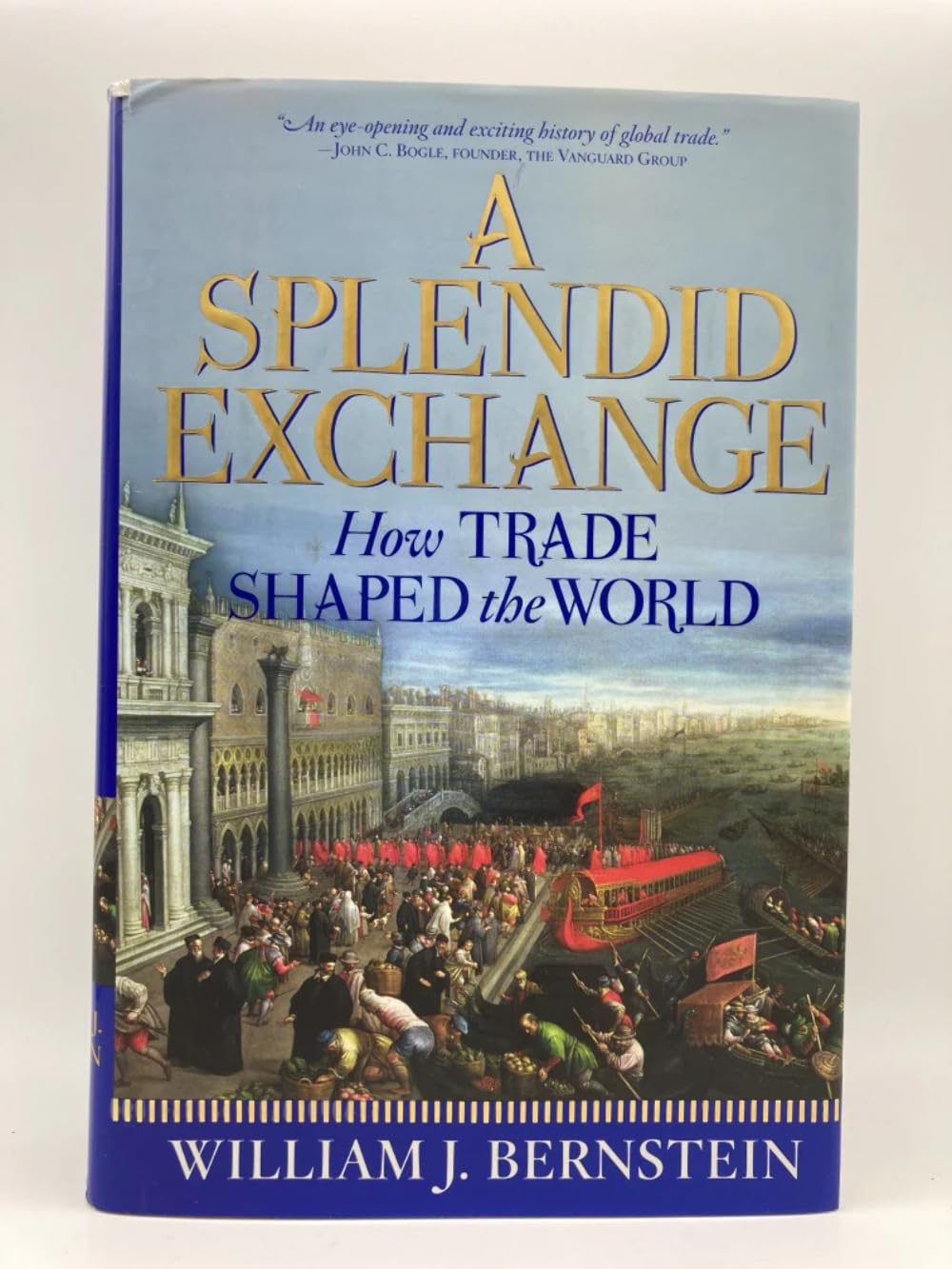
A Splendid Exchange Summary
By William J. Bernstein
How Trade Shaped the World
Summary preview
Trade is one of those ordinary miracles that can hide in plain sight. A cup of coffee on your table, the shirt on your back, the metal in your phone, the grain in your bread, all of them carry the fingerprints of strangers from far away. What looks simple is in fact the result of an immense human drama, a story of risk, greed, courage, invention, violence, appetite, and exchange. That is the great subject of A Splendid Exchange, and William J. Bernstein tells it not as a dry ledger of imports and exports, but as a grand adventure in which merchants, sailors, kings, pirates, and farmers all play their part. The book begins with a plain but powerful idea. Human beings do not thrive by living alone. We prosper when we swap what we have for what others can provide more easily or more cheaply. That simple act of exchange, repeated over centuries and across continents, built wealth on a scale no emperor could have imagined. Yet the path to global trade was never smooth. It depended on geography, weather, roads, ships, maps, laws, ports, credit, and above all the willingness of people to trust one another just enough to do business. Where trust and order appeared, commerce bloomed. Where rulers preyed on merchants or roads became dangerous, trade withered. What makes this story so lively is that it moves from the earliest caravan trails to the age of giant oceangoing empires, then onward to steam, finance, industrial abundance, and the modern world of container ships and economic interdependence. Along the way, spices become as precious as jewels, silver crosses oceans, disease rides with sailors, and the search for profit changes the fate of whole civilizations. You see why some places grew rich while others fell behind. You also see how often the winners were not the bravest soldiers but the societies that best protected property, rewarded innovation, and let merchants get on with their work. The book never treats trade as pure virtue. Exchange can enrich, but it can also tempt nations into conquest and monopoly. The same sea lane that carries pepper and silk may also carry slaves, soldiers, and plague. The same government that secures ports may also strangle commerce with tariffs and favoritism. This tension runs through the whole tale. Markets widen human possibility, but politics can either nourish them or poison them. By the end, the case is both historical and deeply personal. Trade is not some abstract system out there in statistics and treaties. It is the most practical expression of cooperation among strangers ever devised. It feeds cities, lowers costs, spreads ideas, and binds distant peoples into a shared fate. The book asks you to see the world economy not as a machine, but as a living web built over thousands of years. Once you see that web, everyday life looks different.
Sign up to continue reading
Get access to full book summaries, audio of the summaries, and many more.
Similar Books
Books with a similar vibe—explore more like this.

How Music Got Free
Stephen Witt
What happens when an entire generation commits the same crime?
4.8 (8)36 mins
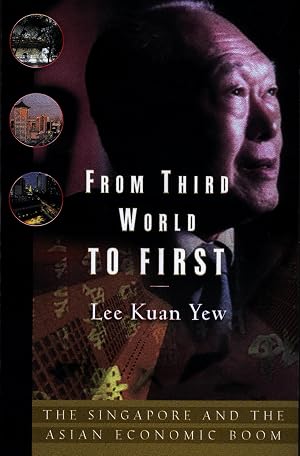
From Third World to First
Lee Kuan Yew
The Singapore Story: 1965-2000
4.7 (16)22 mins

Cobalt Red
Siddharth Kara
How the Blood of the Congo Powers Our Lives
4.6 (4)22 mins
Narconomics
Tom Wainwright
How to Run a Drug Cartel
4.6 (19)29 mins
The Big Short
Michael Lewis
Inside the Doomsday Machine
4.5 (1357)36 mins
Utopia for Realists
Rutger Bregman
And How We Can Get There
4.5 (839)31 mins
Clashing over Commerce
Douglas A. Irwin
A History of US Trade Policy
4.5 (7)23 mins

A Long Way Gone
Ishmael Beah
Memoirs of a Boy Soldier
4.5 (9)27 mins
Technofeudalism
Yanis Varoufakis
What Killed Capitalism
4.5 (39)24 mins

The End of the World Is Just the Beginning
Peter Zeihan
Mapping the Collapse of Globalization
4.5 (105)25 mins