
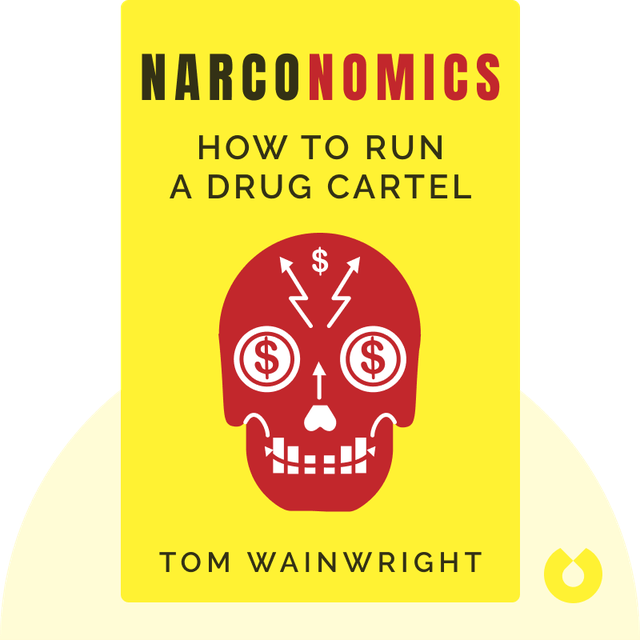
Narconomics Summary
By Tom Wainwright
How to Run a Drug Cartel
Summary preview
What if the best way to understand the global drug trade is not to think like a cop, or a politician, or even a moral crusader, but to think like a business analyst? That is the mischievous, unsettling, and oddly useful idea at the heart of Narconomics. The book takes a world that is usually described in the language of war and asks what happens when you describe it instead in the language of markets, incentives, brands, supply chains, franchising, and labour costs. Once you do that, a lot of the usual stories start to look upside down. Tom Wainwright sets out to show that drug cartels are not mysterious monsters operating outside the rules of economics. They are, in many ways, just firms. Violent firms, illegal firms, often grotesque firms, but firms all the same. They respond to competition. They seek efficiencies. They protect market share. They cut costs where they can. And just like legal companies, they make choices based on what brings the highest return for the lowest risk. If you ignore that basic fact, you end up fighting the wrong battle. That is why so many standard anti drug policies fail. Governments often act as if the problem is mainly about stopping supply at the top. They chase kingpins, spray coca fields, seize shipments, and celebrate every big arrest as though the market will collapse. But markets are stubborn things. If demand stays strong and profits stay huge, someone else steps in. Remove one boss and another appears. Block one route and traffickers open a new one. Destroy crops in one country and production shifts elsewhere. What looks like progress can turn out to be adaptation. The book travels through the drug economy almost like a guided tour of modern capitalism. You see the cartels as multinationals. You see gangs as franchises. You see dealers using branding and customer service. You see how smugglers manage risk, how prisons become training centres, and how prohibition itself can strengthen the biggest and most ruthless players. Again and again, the point is not to excuse crime but to understand it well enough to stop making costly mistakes. Along the way, the story is packed with vivid reporting. We meet traffickers, police, officials, addicts, gang members, and ordinary people trapped inside this strange marketplace. For example, we learn how a pizza chain can teach us something about cocaine distribution, and how the logic behind a fast food franchise can help explain the spread of street gangs. These comparisons are funny until you realise how disturbingly precise they are. By the end, the book is asking a bigger question. If the war on drugs has so often worked like bad business strategy, what would smarter policy look like? The answer is not simple and it is not utopian. But it begins with a shift in perspective. To deal with the narcotics trade, you must first understand the incentives that drive it. Once you do, the whole landscape looks different.
Sign up to continue reading
Get access to full book summaries, audio of the summaries, and many more.
Similar Books
Books with a similar vibe—explore more like this.
How Music Got Free
Stephen Witt
What happens when an entire generation commits the same crime?
4.8 (8)36 mins
From Third World to First
Lee Kuan Yew
The Singapore Story: 1965-2000
4.7 (16)22 mins
Cobalt Red
Siddharth Kara
How the Blood of the Congo Powers Our Lives
4.6 (4)22 mins
A Splendid Exchange
William J. Bernstein
How Trade Shaped the World
4.6 (7)30 mins
The Big Short
Michael Lewis
Inside the Doomsday Machine
4.5 (1357)36 mins
Utopia for Realists
Rutger Bregman
And How We Can Get There
4.5 (839)31 mins
Clashing over Commerce
Douglas A. Irwin
A History of US Trade Policy
4.5 (7)23 mins

A Long Way Gone
Ishmael Beah
Memoirs of a Boy Soldier
4.5 (9)27 mins
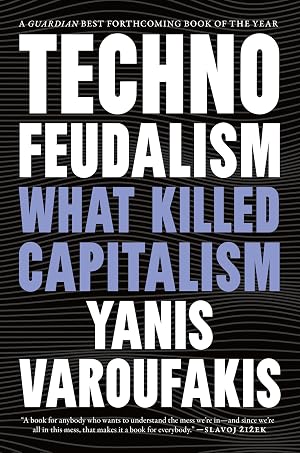
Technofeudalism
Yanis Varoufakis
What Killed Capitalism
4.5 (39)24 mins
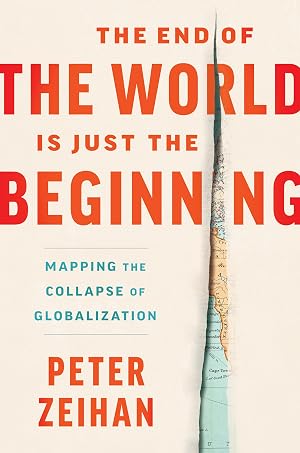
The End of the World Is Just the Beginning
Peter Zeihan
Mapping the Collapse of Globalization
4.5 (105)25 mins