
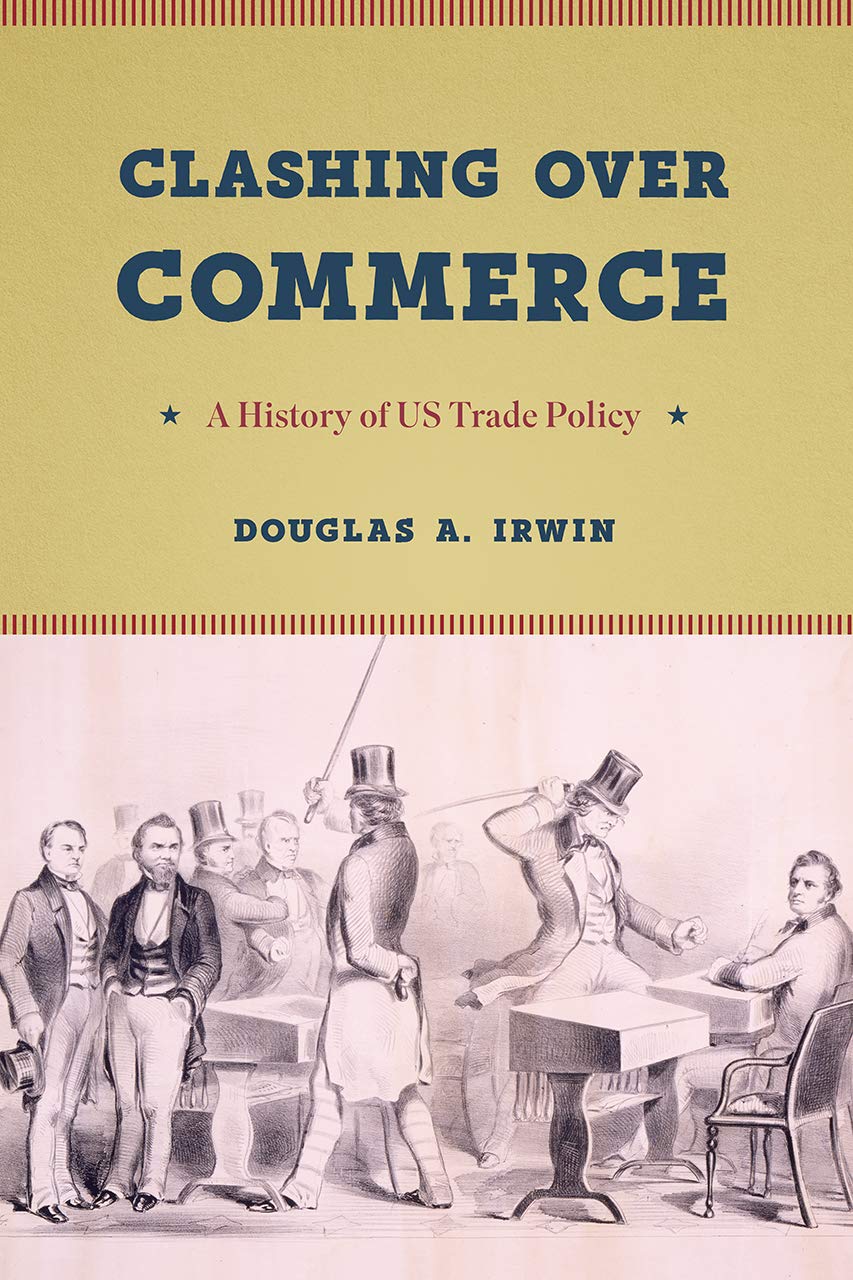
Clashing over Commerce Summary
By Douglas A. Irwin
A History of US Trade Policy
Summary preview
Trade policy in the United States has never been a dry matter of tariffs and treaties. It has always been a political drama about who wins, who loses, and who gets to define the national interest. That is the beating heart of Clashing over Commerce. The book tells a long, deeply American story about conflict over foreign trade from the founding of the republic to the present. It asks a simple question with huge consequences. Why has the United States swung back and forth between protection and openness, between fear of foreign competition and confidence in global exchange? Douglas A. Irwin approaches that question not as a preacher for free trade or as a scold of protectionism, but as a historian trying to show how each generation wrestled with the same basic tensions. Farmers and manufacturers, exporters and import competing firms, workers and consumers, Congress and the president, all saw trade through their own interests and ideas. What emerges is not a straight line toward liberalization. It is a series of collisions. Regional rivalries, partisan battles, wars, depressions, shifting economic theories, and changing world power all shaped policy. One of the pleasures of the book is that it makes trade policy feel alive. Tariffs are not just rates on a page. They become tools of state building, symbols of sectional identity, bargaining chips in diplomacy, and targets of popular anger. At some moments they finance the federal government. At others they are blamed for economic suffering. Sometimes they protect infant industries. Sometimes they shelter aging ones. Sometimes leaders speak in grand language about national self sufficiency. Sometimes they speak just as grandly about peace through commerce. The story begins when customs duties were the young nation’s main source of revenue and runs through the fierce tariff fights of the nineteenth century, the backlash against the Smoot Hawley tariff, the reciprocal trade revolution of the 1930s, the postwar creation of an open trading order, and the more recent struggles over globalization, deindustrialization, and China. Along the way, the book shows that trade policy is never made in an economic vacuum. It is made in legislatures, elections, cabinet rooms, and moments of crisis. What makes this history so useful is that it explains why old arguments keep returning in new forms. Complaints about unfair competition, worries about dependence on foreigners, hopes for export led prosperity, and demands for relief from import pressure are not new at all. They are recurring features of American life. By tracing those patterns over more than two centuries, the book helps you see that clashes over commerce are really clashes over the kind of country Americans want to be.
Sign up to continue reading
Get access to full book summaries, audio of the summaries, and many more.
Similar Books
Books with a similar vibe—explore more like this.

How Music Got Free
Stephen Witt
What happens when an entire generation commits the same crime?
4.8 (8)36 mins
From Third World to First
Lee Kuan Yew
The Singapore Story: 1965-2000
4.7 (16)22 mins

Cobalt Red
Siddharth Kara
How the Blood of the Congo Powers Our Lives
4.6 (4)22 mins
A Splendid Exchange
William J. Bernstein
How Trade Shaped the World
4.6 (7)30 mins
Narconomics
Tom Wainwright
How to Run a Drug Cartel
4.6 (19)29 mins
The Big Short
Michael Lewis
Inside the Doomsday Machine
4.5 (1357)36 mins
Utopia for Realists
Rutger Bregman
And How We Can Get There
4.5 (839)31 mins

A Long Way Gone
Ishmael Beah
Memoirs of a Boy Soldier
4.5 (9)27 mins
Technofeudalism
Yanis Varoufakis
What Killed Capitalism
4.5 (39)24 mins
The End of the World Is Just the Beginning
Peter Zeihan
Mapping the Collapse of Globalization
4.5 (105)25 mins