
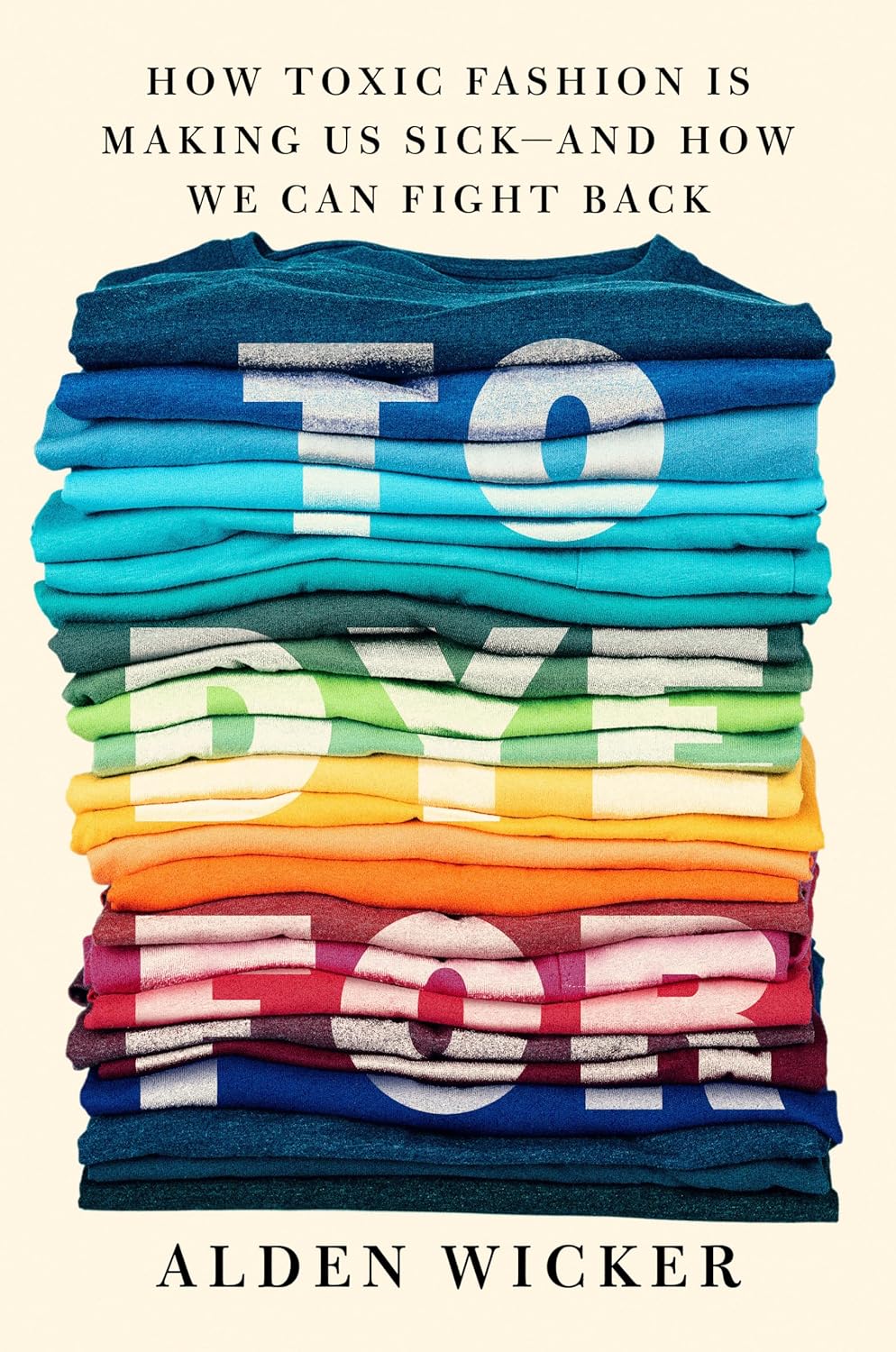
To Dye For Summary
By Alden Wicker
How Toxic Fashion Is Making Us Sick
Summary preview
Clothes are supposed to make us feel good. They are supposed to help us move through the world with confidence, beauty, comfort, and maybe even a little joy. But what if the very shirt that feels soft on your skin, or the leggings you wear to yoga, or the mattress you sleep on every night is also quietly making you sick? That unsettling question sits at the heart of To Dye For, where Alden Wicker takes a problem most of us never think about and makes it impossible to ignore. The book begins with a mystery that is personal, physical, and urgent. Strange rashes, painful itching, baffling symptoms, and a long search for answers push the story forward. What starts as one person trying to understand why her body is reacting so violently becomes a much larger investigation into the hidden chemistry of fashion. It turns out that our clothes are not just fabric. They are industrial products. They are treated, dyed, washed, softened, waterproofed, wrinkle proofed, stain resistant, and finished with a huge range of chemicals that most shoppers never see and companies rarely explain. From there, the book opens up into a sweeping tour of modern fashion and manufacturing. You are taken into textile mills, laboratories, factories, and supply chains that stretch across the globe. You meet scientists, doctors, sustainability experts, workers, and people whose health has been transformed by contact with toxic substances in clothing and home textiles. The picture that emerges is both shocking and weirdly ordinary. These chemicals are not hidden in some fringe corner of consumer life. They are in everyday basics, luxury items, children’s products, furniture, activewear, and fast fashion. What makes the book powerful is that it is not just a list of scary ingredients. It is also about how the system came to work this way. Cheap clothes, quick trend cycles, weak regulation, trade secrecy, and a business culture that prizes performance and price over human health all combine to keep the problem invisible. As the investigation deepens, the story asks bigger questions about trust, transparency, and who bears the cost of convenience. At the same time, this is not a hopeless book. It is a practical one. It shows how consumers can reduce risk, how brands can do better, and how policy could change if enough people demand it. By the end, you come away seeing fashion differently. A garment is no longer just a color, a cut, or a price tag. It is a chemical object with a history, and your body is part of that story whether companies admit it or not.
Sign up to continue reading
Get access to full book summaries, audio of the summaries, and many more.
Similar Books
Books with a similar vibe—explore more like this.
Value(s)
Mark Carney
Building a Better World for All
4.3 (24)22 mins
2030
Mauro F. Guillén
How Today's Biggest Trends Will Collide and Reshape the Future of Everything
4.1 (368)27 mins
Material World
Ed Conway
The Six Raw Materials That Shape Modern Civilization
3.7 (22)25 mins
How Music Got Free
Stephen Witt
What happens when an entire generation commits the same crime?
4.8 (8)36 mins

From Third World to First
Lee Kuan Yew
The Singapore Story: 1965-2000
4.7 (16)22 mins
Losing Eden
Lucy Jones
Why Our Minds Need the Wild
4.6 (641)28 mins
Earth for All
Sandrine Dixson-Decleve, Owen Gaffney, Jayati Ghosh, Jorgen Randers, Johan Rockstrom and Per Espen Stoknes
A Survival Guide for Humanity
4.6 (14)20 mins
The Watchman's Rattle
Rebecca D. Costa
Thinking Our Way Out of Extinction
4.6 (10)22 mins

Cobalt Red
Siddharth Kara
How the Blood of the Congo Powers Our Lives
4.6 (4)22 mins

A Splendid Exchange
William J. Bernstein
How Trade Shaped the World
4.6 (7)30 mins