
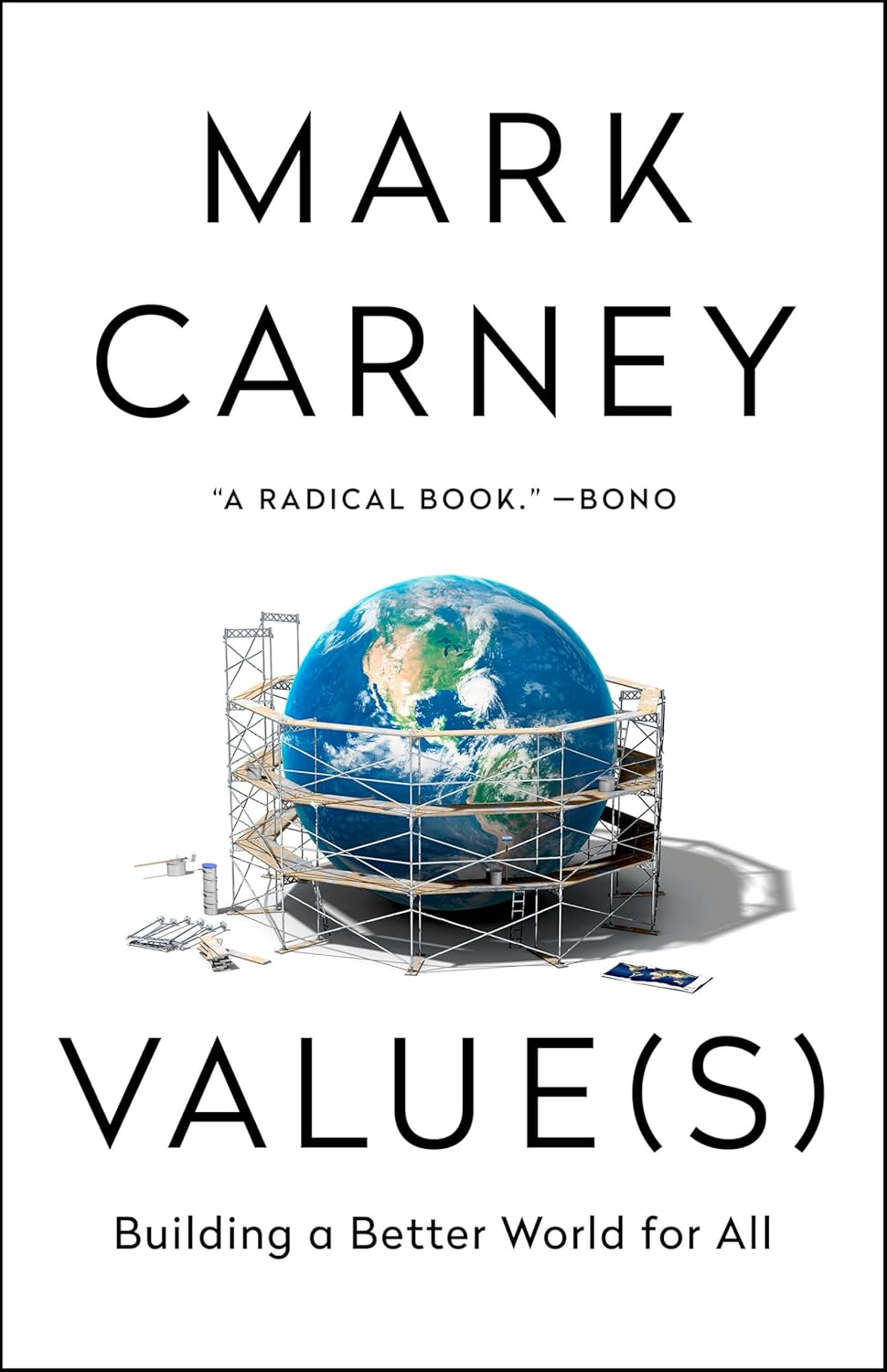
Value(s) Summary
By Mark Carney
Building a Better World for All
Summary preview
Value(s) is a book about a quiet crisis that touches almost everything around us. It asks a simple question that turns out to be huge. What do we value, and why do our markets, our politics, and even our daily choices so often fail to reflect it? Mark Carney begins from the feeling that something has gone badly out of balance. We live in a world of dazzling wealth and technical power, yet we also face deep inequality, financial fragility, environmental breakdown, and a thinning of trust. The problem is not just that we have made bad decisions. It is that we have let market prices crowd out moral values. We have started to treat price as if it were the same thing as worth. The book is not an attack on markets as such. Quite the opposite. Markets can be extraordinary tools. They coordinate effort, spread information, reward innovation, and lift living standards. But they are tools, not creeds. When they become the measure of all things, they begin to distort the very society they are supposed to serve. That is the heart of the argument. We moved from a market economy to a market society, and in doing so we forgot that values such as fairness, resilience, sustainability, solidarity, and responsibility cannot simply be left to the invisible hand. What gives the book its force is that it is built from lived experience as well as broad reading. The author moves between economic history, philosophy, public policy, and moments from his years at the centre of global finance. The 2008 crisis, the euro area turmoil, Brexit, the pandemic, and the climate emergency all become windows into one larger story. Again and again, we see what happens when short term gain beats long term stewardship, when risk is shuffled around rather than understood, and when leaders act as if numbers alone can guide them. Yet this is not a book of despair. It is an argument for rebuilding. The claim is that society can reconnect value with values, but only if we recover a richer idea of what the economy is for. Finance must serve households and businesses rather than itself. Companies must look beyond quarterly earnings. Governments must create frameworks that reward what matters over time. Citizens must insist that prosperity be shared and durable. And all of us must accept that some goods are public, some duties are mutual, and some truths cannot be reduced to a spreadsheet. What follows is a journey through how we got here and what a better settlement might look like. It is about crises, certainly, but even more about character. It asks us to think about trust, legitimacy, duty, and the common good. And it insists that if we want a more stable, more humane future, we have to choose it deliberately.
Sign up to continue reading
Get access to full book summaries, audio of the summaries, and many more.
Similar Books
Books with a similar vibe—explore more like this.
To Dye For
Alden Wicker
How Toxic Fashion Is Making Us Sick
4.4 (14) mins
2030
Mauro F. Guillén
How Today's Biggest Trends Will Collide and Reshape the Future of Everything
4.1 (368)27 mins
Material World
Ed Conway
The Six Raw Materials That Shape Modern Civilization
3.7 (22) mins
How Music Got Free
Stephen Witt
What happens when an entire generation commits the same crime?
4.8 (8)36 mins
From Third World to First
Lee Kuan Yew
The Singapore Story: 1965-2000
4.7 (16)22 mins
Losing Eden
Lucy Jones
Why Our Minds Need the Wild
4.6 (641)28 mins
Earth for All
Sandrine Dixson-Decleve, Owen Gaffney, Jayati Ghosh, Jorgen Randers, Johan Rockstrom and Per Espen Stoknes
A Survival Guide for Humanity
4.6 (14) mins
The Watchman's Rattle
Rebecca D. Costa
Thinking Our Way Out of Extinction
4.6 (10) mins
Cobalt Red
Siddharth Kara
How the Blood of the Congo Powers Our Lives
4.6 (4) mins
A Splendid Exchange
William J. Bernstein
How Trade Shaped the World
4.6 (7) mins